English
 Español
 tiếng việt
 русский
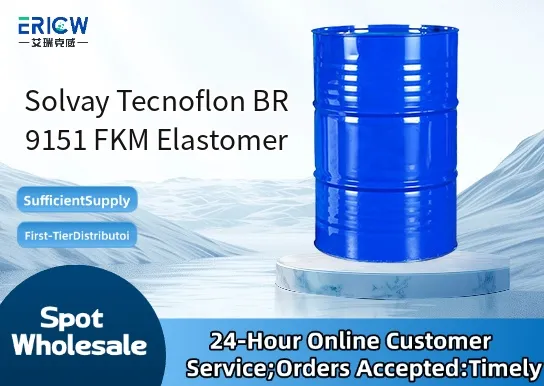
High resistance to aggressive automotive fluids including modern low-viscosity engine oils and biofuel blends.
Excellent compression set resistance at elevated temperatures up to 200 °C.
Superior thermal stability and long-term aging performance in demanding under-hood environments.
Good processability on standard rubber processing equipment, including extrusion and injection molding.
Low extractables profile, supporting compliance with stringent OEM material specifications.
Automotive fuel system components such as fuel injector O-rings and fuel rail seals.
Engine oil management parts including turbocharger hose couplings and valve cover gaskets.
Transmission and powertrain sealing solutions exposed to hot automatic transmission fluid (ATF) and dual-clutch transmission oils.
Under-hood sensors and actuator housings requiring long-term dimensional stability at high operating temperatures.
Industrial hydraulic systems operating with HFD-U type fire-resistant fluids.
| Chemical Type | Fluoroelastomer (FKM), bisphenol-cured |
| Product Form | Uncured gum stock, sheet or slab form |
| Appearance | Light tan to amber colored, homogeneous elastomeric sheet |
| Primary Applications | High-performance static and dynamic seals in automotive powertrain systems |
| Key Features | Fluid resistance, heat resistance, low compression set, OEM-qualified processability |
| Benefits | Extended service life, reduced leakage risk, compatibility with modern low-SAPS lubricants |
| Standard Compliance | Meets ASTM D1418 classification: FKM; ISO 1629 designation: FPM |
Q1: What is the primary chemical resistance profile of Tecnoflon BR 9151?
A: Tecnoflon BR 9151 is a bisphenol-cured fluoroelastomer offering excellent resistance to aggressive hydrocarbons, aromatic and chlorinated solvents, hot oils, and many acidic and alkaline media commonly encountered in demanding industrial and automotive sealing applications.
Q2: How does BR 9151 compare to peroxide-cured FKM grades in terms of compression set performance?
A: As a bisphenol-cured grade, BR 9151 delivers very low compression set at elevated temperatures—typically superior to standard peroxide-cured FKMs—making it especially suitable for static and dynamic seals requiring long-term dimensional stability under thermal stress.
Q3: Is BR 9151 suitable for use in contact with fuels containing bio-components such as ethanol or biodiesel?
A: Yes—BR 9151 demonstrates robust resistance to modern fuel blends, including those with moderate levels of ethanol (E10–E15) and fatty acid methyl esters (FAME), supporting its use in fuel system components across automotive and off-highway applications.
Q4: What are typical processing considerations for BR 9151 during mixing and molding?
A: BR 9151 processes well on standard rubber equipment. It exhibits good scorch safety and uniform cure characteristics in both compression and injection molding. Optimal curing requires precise temperature control and adequate post-cure to achieve full fluoropolymer network development and optimal mechanical properties.
Contact With Us:
E-mail: wangxingqiang@ericwchem.com
Have a Questions? Call Us:
Add:
Building A1, Jiete Industrial Park, Huangpu District, Guangzhou City, Guangdong Province, China