English
 Español
 tiếng việt
 русский
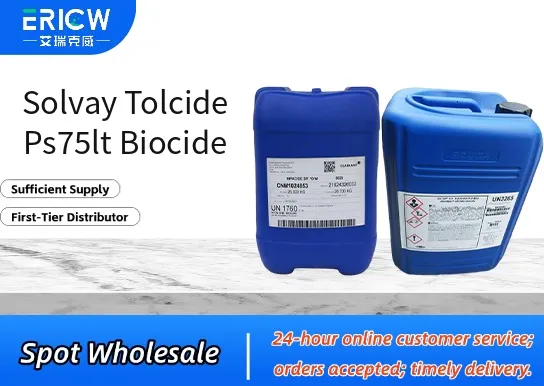
Broad-spectrum efficacy against bacteria, fungi, and algae in industrial water systems.
Low-toxicity formulation compliant with major global regulatory frameworks including EU BPR and US EPA guidelines.
Excellent stability in high-hardness and high-pH cooling water environments.
Non-oxidizing chemistry that minimizes corrosion risk to ferrous and non-ferrous metallurgy.
Compatible with common scale inhibitors, dispersants, and other water treatment additives.
Cooling water systems in power generation plants.
Process water circuits in petrochemical and refinery operations.
Recirculating water loops in HVAC and district cooling installations.
Make-up water treatment for closed-loop industrial heat exchange systems.
Biocide maintenance dosing in membrane filtration pre-treatment stages.
| Chemical Type | Isothiazolinone-based biocide blend |
| Product Form | Liquid concentrate |
| Appearance | Clear, pale yellow liquid |
| pH (1% aqueous solution) | 3.0 – 4.5 |
| Density (20°C) | 1.08 – 1.12 g/cm³ |
| Solubility | Completely miscible in water |
| Primary Applications | Industrial cooling water, process water, HVAC systems |
| Key Features | Non-oxidizing, low-foaming, chlorine-stable |
Q1: What is Solvay Tolcide PS75LT Biocide primarily used for?
A: Solvay Tolcide PS75LT Biocide is a broad-spectrum preservative designed for use in water-based industrial formulations, including coatings, adhesives, sealants, and construction chemicals, where long-term microbial control is required during storage and in-service performance.
Q2: Is Tolcide PS75LT compatible with common formulation ingredients such as surfactants, thickeners, and pigments?
A: Yes, Tolcide PS75LT demonstrates good compatibility with a wide range of formulation components, including nonionic and anionic surfactants, associative and non-associative thickeners, and most inorganic and organic pigments. Compatibility testing under actual formulation conditions is recommended prior to full-scale implementation.
Q3: How should Tolcide PS75LT be incorporated into a formulation?
A: It is typically added during the final stage of manufacturing, after pH adjustment and cooling, to minimize thermal degradation and ensure optimal stability. Pre-dilution with water or a compatible solvent may be used to facilitate uniform dispersion, especially in high-viscosity systems.
Q4: What is the typical dosage range for effective preservation?
A: Effective dosage generally ranges from 0.1% to 2% by weight of the total formulation, depending on microbial challenge level, raw material bioburden, and intended application environment. Optimal concentration should be determined through challenge testing per relevant industry guidelines.
Contact With Us:
E-mail: wangxingqiang@ericwchem.com
Have a Questions? Call Us:
Add:
Building A1, Jiete Industrial Park, Huangpu District, Guangzhou City, Guangdong Province, China