English
 Español
 tiếng việt
 русский
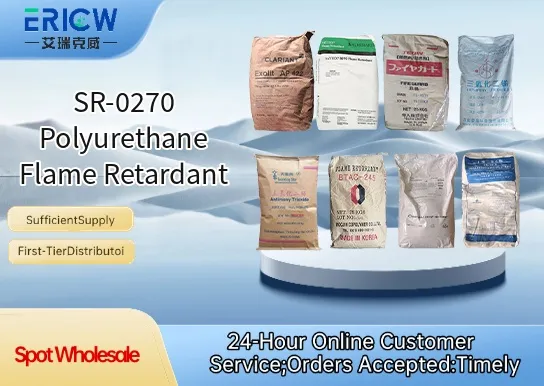
Halogen-free formulation ensuring low smoke density and minimal toxic gas emission during combustion.
Excellent compatibility with flexible and rigid polyurethane foams without compromising mechanical properties.
Effective flame retardancy achieving UL 94 HF-1 and FMVSS 302 compliance in standard formulations.
Thermally stable up to 220 °C, supporting conventional PU processing temperatures.
Low volatility and negligible migration, contributing to long-term fire performance retention.
Automotive interior foam components including seat cushions, headrests, and armrests.
Residential and commercial upholstered furniture foam cores requiring CAL 117 or BS 5852 compliance.
Building insulation boards and sandwich panel core materials for non-structural applications.
Marine upholstery foams meeting IMO FTPC Part 5 flammability requirements.
Medical equipment padding where low-smoke, low-toxicity performance is critical.
| Chemical Type | Organophosphorus-based flame retardant |
| Product Form | Free-flowing white to off-white granular solid |
| Appearance | Uniform granules, no visible dust or clumps |
| Density (25 °C) | 1.45–1.55 g/cm³ |
| Moisture Content | ≤ 0.3 wt% |
| Melting Range | 185–195 °C |
| pH (10% aqueous dispersion) | 6.0–7.5 |
| Storage Stability | Stable under dry, cool conditions (≤ 30 °C) for ≥ 24 months |
Q1: What types of polyurethane systems is SR-0270 compatible with?
A: SR-0270 is formulated for compatibility with a broad range of flexible and rigid polyurethane foams, including slabstock, molded, and integral skin systems. It performs well in both toluene diisocyanate (TDI) and methylene diphenyl diisocyanate (MDI)-based formulations, as well as in water-blown and physical-blowing-agent systems.
Q2: How does SR-0270 affect foam processing and physical properties?
A: When incorporated at recommended levels, SR-0270 typically has minimal impact on cream time, gel time, or demold time. It maintains good compatibility with common catalysts and surfactants, and generally preserves key mechanical properties such as tensile strength, elongation, and compression set—especially when optimized within the formulation matrix.
Q3: Is SR-0270 suitable for low-emission or indoor air quality–sensitive applications?
A: Yes—SR-0270 is designed to support low-VOC and low-odor requirements in finished polyurethane foams. It exhibits low volatility and minimal tendency to migrate or bloom under normal service conditions, contributing to improved indoor air quality compliance in furniture, bedding, and automotive interior applications.
Q4: What is the typical dosage range for effective flame retardancy?
A: Effective performance is generally achieved at low concentrations, typically ranging from 0.1% to 2% by weight relative to the total polyol component. Optimal dosage depends on foam density, cell structure, base polymer composition, and target fire performance standards (e.g., UL 94 HF-1, CAL 117).
Contact With Us:
E-mail: wangxingqiang@ericwchem.com
Have a Questions? Call Us:
Add:
Building A1, Jiete Industrial Park, Huangpu District, Guangzhou City, Guangdong Province, China