English
 Español
 tiếng việt
 русский
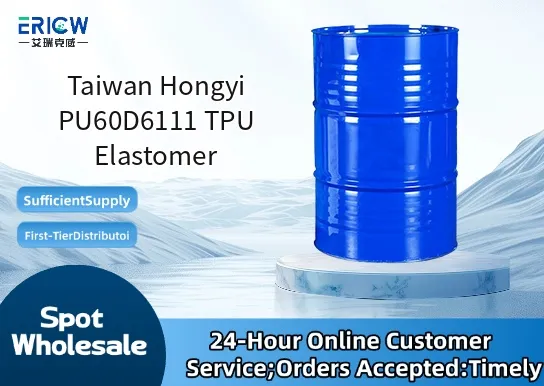
Excellent abrasion resistance for extended service life in demanding mechanical environments.
Outstanding elasticity and recovery performance, maintaining shape integrity after repeated deformation.
Good low-temperature flexibility down to –30 °C without significant stiffness increase.
Compatible with common thermoplastic processing methods including extrusion, injection molding, and blow molding.
Low extractables and compliant with FDA 21 CFR §177.1680 for indirect food contact applications.
Automotive interior trim components such as instrument panel skins and door armrest covers.
High-performance footwear midsoles and outsoles requiring resilience and energy return.
Industrial hoses and fluid transfer tubing for pneumatic and hydraulic systems.
Protective gear components including sports padding, medical orthotic shells, and wearable device housings.
Flexible printed electronics substrates and elastomeric connectors requiring dimensional stability.
| Chemical Type | Aliphatic polyester-based thermoplastic polyurethane |
| Product Form | Pellets |
| Appearance | Off-white translucent granules |
| Hardness (Shore D) | 60 ± 2 |
| Melt Flow Index (230 °C / 2.16 kg) | 12–16 g/10 min |
| Density | 1.18–1.20 g/cm³ |
| Processing Temperature Range | 190–220 °C |
| Primary Applications | Soft-touch overmolding, flexible functional parts, wear-resistant components |
Q1: What are the key processing methods suitable for PU60D6111?
A: PU60D6111 is designed for melt-processing techniques including injection molding, extrusion, and blow molding. It exhibits good melt stability and low viscosity at typical processing temperatures, enabling efficient shaping into thin-walled or complex geometries without excessive thermal degradation.
Q2: How does PU60D6111 compare to conventional polyester-based TPUs in terms of hydrolytic stability?
A: As a polyether-based TPU elastomer, PU60D6111 offers significantly improved resistance to hydrolysis compared to polyester-type TPUs—especially under warm, humid conditions or prolonged water exposure—making it well-suited for outdoor applications and environments with high moisture cycling.
Q3: Can PU60D6111 be blended with other thermoplastics or elastomers?
A: Yes, PU60D6111 demonstrates good compatibility with several engineering thermoplastics such as PC, ABS, and certain grades of PP when used with appropriate compatibilizers. Blending is typically employed to tailor flexibility, impact performance, or surface feel—though thorough formulation testing is recommended to verify phase stability and mechanical integrity.
Q4: Is PU60D6111 suitable for applications requiring skin contact or medical-adjacent use?
A: While PU60D6111 is not certified for implantable or regulated medical devices, it meets common requirements for non-invasive, short-term skin-contact applications—such as wearable housings, grips, and protective covers—due to its low extractables profile and absence of plasticizers or heavy-metal catalysts.
Contact With Us:
E-mail: wangxingqiang@ericwchem.com
Have a Questions? Call Us:
Add:
Building A1, Jiete Industrial Park, Huangpu District, Guangzhou City, Guangdong Province, China