English
 Español
 tiếng việt
 русский
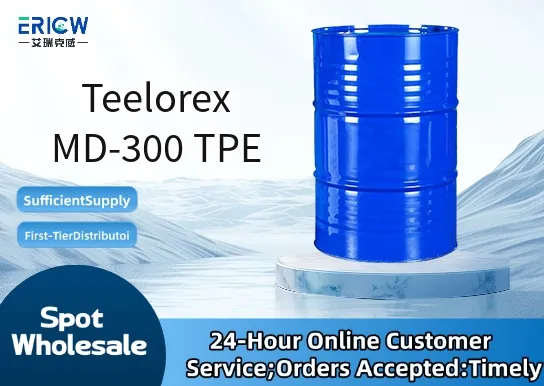
Excellent soft-touch feel with Shore A 30 hardness for ergonomic handling.
Good thermal stability up to 120°C continuous use temperature.
High melt flow index (MFI) of 15 g/10 min @ 230°C/2.16 kg, enabling efficient injection molding and extrusion.
Outstanding adhesion to polypropylene (PP) and polyethylene (PE) without primers or surface treatment.
RoHS-compliant and free of phthalates, heavy metals, and halogens.
Overmolded grips for power tools and hand-held appliances.
Sealing rings and gaskets in automotive fluid systems.
Soft-touch control panels and interface elements for medical devices.
Flexible hinges and snap-fit components in consumer electronics housings.
Recyclable packaging closures requiring elasticity and seal integrity.
| Chemical Type | Thermoplastic Elastomer (TPE-SEBS based) |
| Product Form | Pellets |
| Appearance | Off-white, translucent granules |
| Shore Hardness (A Scale) | 30 ± 2 |
| Melt Flow Index (g/10 min) | 15 @ 230°C / 2.16 kg |
| Density (g/cm³) | 0.91 ± 0.01 |
| Tensile Strength (MPa) | 4.5–5.2 |
| Elongation at Break (%) | ≥ 450 |
Q1: What is the primary function of Teelorex MD-300 TPE in thermoplastic elastomer formulations?
A: Teelorex MD-300 TPE is a processing aid and melt-flow modifier designed to enhance extrudability, reduce die swell, and improve surface finish in TPE compounds—particularly in SEBS- and TPO-based systems.
Q2: Is Teelorex MD-300 TPE compatible with common polymer matrices such as PP, PE, and SEBS?
A: Yes—it demonstrates good compatibility with polyolefin-based TPEs (e.g., TPOs), styrenic block copolymers (SEBS, SBS), and certain functionalized polyethylene grades. Compatibility should be verified under actual processing conditions due to formulation-specific variables.
Q3: How is Teelorex MD-300 TPE typically incorporated into compound formulations?
A: It is generally introduced during the compounding stage—either via side-feeding or masterbatch dilution—and disperses readily under standard twin-screw extrusion conditions. Dosage depends on formulation requirements but typically ranges from 0.1% to 2% by weight.
Q4: Does Teelorex MD-300 TPE affect the final mechanical properties of TPE products?
A: When used within recommended dosage levels, it maintains key performance attributes—including tensile strength, elongation at break, and hardness—while improving process efficiency. Significant over-dosing may impact crosslink density or phase morphology in dynamically vulcanized systems.
Contact With Us:
E-mail: wangxingqiang@ericwchem.com
Have a Questions? Call Us:
Add:
Building A1, Jiete Industrial Park, Huangpu District, Guangzhou City, Guangdong Province, China