English
 Español
 tiếng việt
 русский
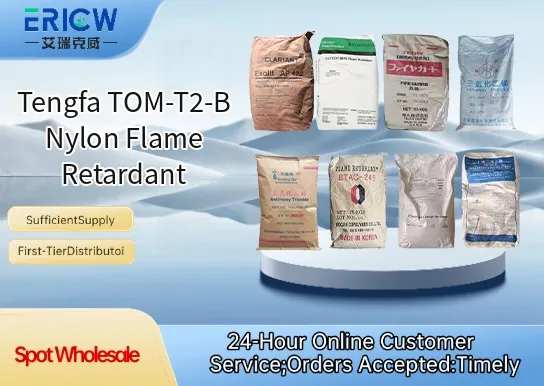
Halogen-free formulation ensuring low smoke and zero corrosive gas emission during combustion.
Excellent thermal stability compatible with nylon 6 and nylon 66 processing temperatures up to 280 °C.
Superior compatibility and dispersion in nylon matrix without blooming or migration.
UL94 V-0 rated at 1.6 mm thickness when compounded at recommended loading (12–15 wt%).
RoHS and REACH compliant, supporting sustainable and regulatory-safe material design.
Electrical connectors and housings for automotive ECUs and charging systems.
Consumer electronics enclosures requiring high flame resistance and dimensional stability.
Industrial automation components exposed to elevated ambient temperatures.
Power tool housings and motor insulation parts demanding mechanical robustness and fire safety.
3C product structural parts where UL certification and low halogen content are mandatory.
| Chemical Type | Phosphorus-based organic flame retardant |
| Product Form | Free-flowing white granules |
| Appearance | Off-white to light beige granules |
| Primary Applications | Flame-retarded nylon 6 and nylon 66 compounds |
| Key Features | Halogen-free, UL94 V-0 capable, thermally stable |
| Benefits | No corrosion, low smoke density, excellent melt compatibility |
| Density | 1.35–1.42 g/cm³ (at 23 °C) |
| Recommended Loading Range | 12–15 wt% in nylon resin |
Q1: What is the primary mechanism of flame retardancy for TOM-T2-B in nylon applications?
A: TOM-T2-B functions primarily through a condensed-phase mechanism, promoting char formation and enhancing thermal stability of the nylon matrix during combustion. It does not rely on halogen-based chemistry and is designed to minimize smoke and corrosive gas generation.
Q2: Is TOM-T2-B compatible with common nylon resins such as PA6 and PA66?
A: Yes, TOM-T2-B demonstrates good compatibility with both PA6 and PA66, including glass-fiber-reinforced grades. It exhibits minimal impact on mechanical properties when properly dispersed and processed under standard melt-compounding conditions.
Q3: How is TOM-T2-B typically incorporated into nylon formulations?
A: TOM-T2-B is generally introduced via masterbatch or direct dry-blend methods prior to extrusion. It is thermally stable up to typical nylon processing temperatures and requires adequate shear mixing to ensure uniform dispersion throughout the polymer matrix.
Q4: Does TOM-T2-B affect the color or clarity of nylon parts?
A: TOM-T2-B is supplied as a light-colored powder and typically yields neutral-tinted compounds in unfilled nylons. In highly transparent or white-grade applications, minor yellowing may occur at elevated loadings or prolonged thermal exposure—pre-testing under end-use processing conditions is recommended.
Q5: Can TOM-T2-B be used in applications requiring regulatory compliance for electronics or automotive components?
A: TOM-T2-B is formulated to support compliance with widely recognized flammability standards for engineering plastics, including UL94 V-0 ratings in appropriate nylon systems. Its halogen-free profile aligns with industry trends toward low-halogen and RoHS-compliant materials, though final certification depends on full formulation and part geometry.
Contact With Us:
E-mail: wangxingqiang@ericwchem.com
Have a Questions? Call Us:
Add:
Building A1, Jiete Industrial Park, Huangpu District, Guangzhou City, Guangdong Province, China