English
 Español
 tiếng việt
 русский
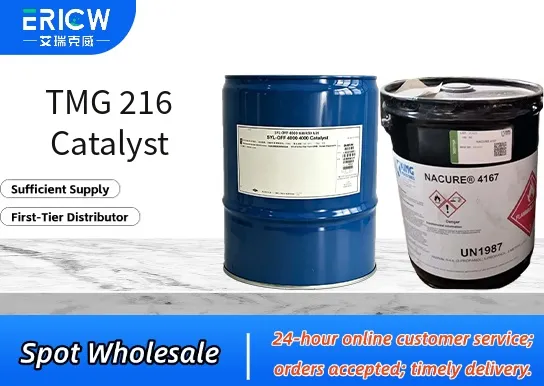
Highly selective for low-temperature urethane polymerization, minimizing side reactions.
Excellent hydrolytic stability, ensuring consistent performance in moisture-sensitive formulations.
Low volatility and negligible vapor pressure, enhancing workplace safety and formulation shelf life.
Compatible with polyether and polyester polyols, as well as aromatic and aliphatic isocyanates.
Non-corrosive to common processing equipment and packaging materials.
Flexible and rigid polyurethane foam manufacturing (slabstock, molded, and spray applications).
Coatings and adhesives requiring balanced reactivity and pot-life control.
Sealants and elastomers where low odor and low fogging are critical.
Automotive interior components including seat foams and instrument panel systems.
Building insulation panels and cold-chain thermal insulation systems.
| Chemical Type | Tertiary amine-based catalyst (non-metallic) |
| Product Form | Clear, colorless to pale yellow liquid |
| Appearance | Homogeneous liquid, free from sediment or cloudiness |
| Primary Applications | Polyurethane foam, coatings, adhesives, sealants |
| Key Features | Low-odor, non-staining, hydrolytically stable |
| Benefits | Improved processing safety, extended pot life, reduced VOC emissions |
| Storage Conditions | Store in original sealed container at 15–25°C, protect from moisture |
| Shelf Life | 24 months from date of manufacture when stored properly |
Q1: What is the primary function of TMG 216 Catalyst in polymer synthesis?
A: TMG 216 Catalyst is a highly active tertiary amine-based catalyst designed to promote urethane and urea reactions in polyurethane systems, particularly enhancing gel and foam rise kinetics while supporting balanced reactivity profiles in flexible and semi-rigid foams.
Q2: Is TMG 216 Catalyst compatible with water-blown and low-VOC formulations?
A: Yes — TMG 216 is formulated for compatibility with water-blown systems and supports low-VOC manufacturing strategies due to its non-volatile nature and absence of regulated volatile amines or heavy metals.
Q3: How should TMG 216 Catalyst be handled and stored to maintain performance?
A: Store in original sealed containers at temperatures between 10°C and 30°C, away from moisture, strong oxidizing agents, and direct sunlight. Keep containers tightly closed when not in use to prevent absorption of atmospheric CO₂ or humidity, which may affect catalytic activity over time.
Q4: Can TMG 216 Catalyst be used in combination with other catalysts?
A: Yes — TMG 216 is commonly blended with complementary catalysts (e.g., delayed-action amines or metal-based systems) to fine-tune cream-to-gel timing, cell structure development, and post-cure behavior in complex polyurethane formulations.
Q5: What is the typical dosage range for TMG 216 Catalyst in standard polyurethane foam applications?
A: Dosage is formulation-dependent but generally ranges from 0.1% to 2% by weight relative to the polyol component; optimal levels are determined through lab-scale reactivity profiling and must account for system reactivity, desired processing window, and final physical properties.
Contact With Us:
E-mail: wangxingqiang@ericwchem.com
Have a Questions? Call Us:
Add:
Building A1, Jiete Industrial Park, Huangpu District, Guangzhou City, Guangdong Province, China