English
 Español
 tiếng việt
 русский
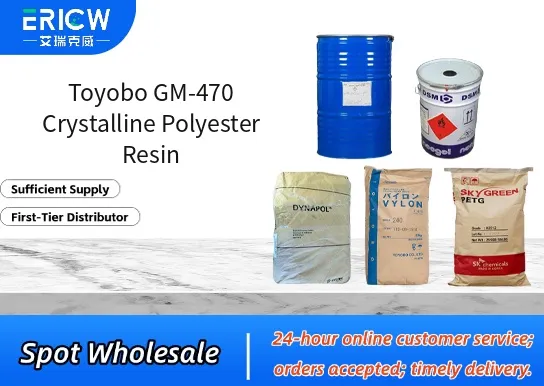
High crystallinity enabling rapid melt solidification and excellent dimensional stability.
Outstanding thermal resistance with continuous use temperature up to 150°C.
Low moisture absorption (<0.2% at 23°C/50% RH), ensuring consistent processing and end-product performance.
Excellent chemical resistance to aliphatic hydrocarbons, weak acids, and common solvents.
Good flow characteristics for precision injection molding of thin-walled and complex geometries.
Automotive under-hood components including sensor housings and connector parts.
Electrical and electronic enclosures requiring flame-retardant compatibility and dimensional reliability.
Industrial fluid handling components such as pump bodies and valve housings.
Consumer appliance structural parts exposed to elevated ambient temperatures.
Food-contact-approved housings (compliant with FDA 21 CFR §177.1450) for kitchen equipment.
| Chemical Type | Copolyester (crystalline, PET-based) |
| Product Form | Pellets |
| Appearance | Off-white, semi-crystalline granules |
| Melt Temperature (DSC, 10°C/min) | 258–262°C |
| Relative Viscosity (0.5 g/dL in o-chlorophenol) | 1.12–1.18 |
| Density (ASTM D792) | 1.34–1.36 g/cm³ |
| Moisture Content (as received) | ≤0.05 wt% |
| Primary Applications | High-precision injection-molded engineering components |
Q1: What is the primary function of GM-470 in powder coating formulations?
A: GM-470 serves as a crystalline polyester resin that functions primarily as a flow and leveling agent, helping to reduce melt viscosity during curing and promoting uniform film formation without excessive sagging or edge pull.
Q2: Is GM-470 compatible with standard epoxy-based or hybrid powder coating systems?
A: Yes, GM-470 exhibits good compatibility with common epoxy, triglycidyl isocyanurate (TGIC), and hydroxyalkyl amide (HAA) curing systems, enabling its use in both pure polyester and hybrid thermoset powder coatings.
Q3: How does GM-470 differ from amorphous polyester resins in processing behavior?
A: Unlike amorphous polyesters, GM-470’s crystalline structure imparts sharper melting characteristics and lower storage viscosity in the solid state, which enhances storage stability and enables more controlled melt rheology during extrusion and curing.
Q4: What are recommended handling and storage conditions for GM-470?
A: Store in a cool, dry environment below 30 °C and protect from moisture and direct sunlight. Due to its crystalline nature, avoid prolonged exposure to high humidity or temperature fluctuations to prevent agglomeration or premature partial melting.
Contact With Us:
E-mail: wangxingqiang@ericwchem.com
Have a Questions? Call Us:
Add:
Building A1, Jiete Industrial Park, Huangpu District, Guangzhou City, Guangdong Province, China