English
 Español
 tiếng việt
 русский
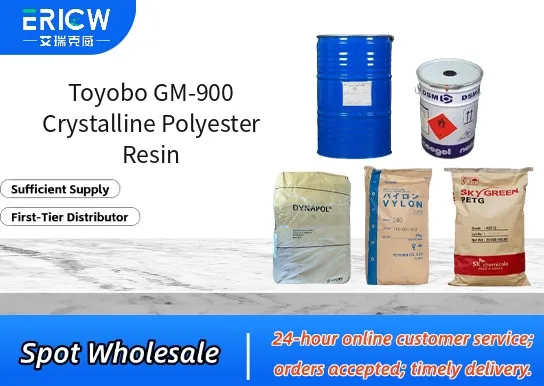
High crystallinity enabling rapid melt solidification and excellent dimensional stability.
Outstanding thermal resistance with continuous use temperature up to 150 °C.
Low moisture absorption (<0.3% at 23 °C/50% RH), ensuring consistent processing and end-product reliability.
Excellent chemical resistance to hydrocarbons, alcohols, and weak acids.
Designed for high-speed injection molding with low viscosity in molten state and narrow melting range (Tm ≈ 258–262 °C).
High-performance automotive under-hood components (e.g., sensor housings, connectors).
Precision industrial parts requiring thermal and dimensional stability (e.g., pump impellers, valve bodies).
Electrical and electronic enclosures exposed to elevated ambient temperatures.
Reusable medical device components compatible with steam and EtO sterilization cycles.
| Chemical Type | Crytalline aromatic polyester (sulfone-modified polyarylate backbone) |
| Product Form | Pellets (natural color, free-flowing) |
| Appearance | Off-white translucent granules |
| Melting Temperature (DSC, 10 °C/min) | 258–262 °C |
| Density (ASTM D792) | 1.32–1.34 g/cm³ |
| Melt Flow Rate (265 °C / 2.16 kg, ASTM D1238) | 12–16 g/10 min |
| Tensile Strength (ISO 527-2, 23 °C) | 95–102 MPa |
| Moisture Content (as received, ISO 62) | ≤ 0.15 wt% |
Q1: What is the primary functional role of GM-900 in powder coating formulations?
A: GM-900 serves as a crystalline polyester resin component designed to enhance flow, leveling, and edge coverage in thermosetting powder coatings—particularly where rapid melt viscosity reduction and controlled crystallinity-driven rheology are required during cure.
Q2: How does GM-900 differ from conventional amorphous polyesters used in powder coatings?
A: Unlike amorphous polyesters, GM-900 exhibits defined crystallinity, resulting in sharper melting behavior, improved storage stability at ambient temperatures, and reduced tendency for blocking in bulk handling—while still enabling full crosslinking with standard curing agents such as TGIC or HAA.
Q3: Is GM-900 compatible with common powder coating crosslinkers and additives?
A: Yes—GM-900 is formulated for compatibility with widely used crosslinkers including triglycidyl isocyanurate (TGIC), hydroxyalkyl amides (HAA), and certain blocked isocyanates. It also integrates well with standard flow promoters, degassing agents, and pigment dispersions without compromising dispersion stability or film integrity.
Q4: What are typical processing considerations when incorporating GM-900 into extrusion-based powder manufacturing?
A: Due to its crystalline nature, GM-900 generally requires slightly lower extrusion feed zone temperatures than amorphous resins to avoid premature melting or agglomeration. Melt zone temperatures should be optimized to ensure complete homogenization without thermal degradation—typically within the standard range for crystalline polyesters.
Contact With Us:
E-mail: wangxingqiang@ericwchem.com
Have a Questions? Call Us:
Add:
Building A1, Jiete Industrial Park, Huangpu District, Guangzhou City, Guangdong Province, China