English
 Español
 tiếng việt
 русский
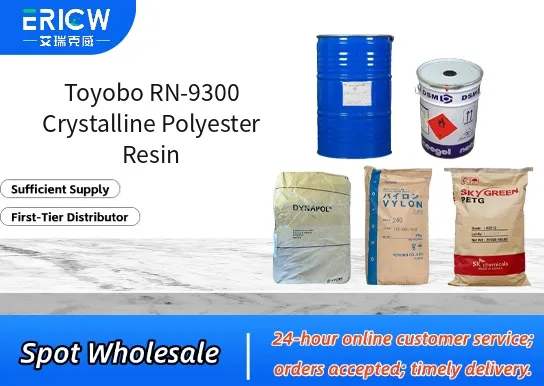
High crystallinity enabling rapid melt solidification and excellent powder flowability.
Outstanding storage stability with minimal agglomeration under ambient conditions.
Low melt viscosity during curing, ensuring uniform film formation and reduced pinholes.
Excellent chemical resistance to solvents, acids, and alkalis after full crosslinking.
Compatible with standard TGIC and hydroxyalkylamide (HAA) curing agents for robust thermoset networks.
Architectural and industrial coil coating systems requiring high gloss retention and weather resistance.
High-performance powder coatings for outdoor metal furniture and fencing.
Automotive under-hood components demanding thermal and chemical durability.
Prefabricated building panels requiring long-term UV stability and color consistency.
Appliance exteriors requiring smooth finish, scratch resistance, and low-temperature cure capability.
| Chemical Type | Crosslinkable crystalline polyester |
| Product Form | Free-flowing white crystalline granules |
| Appearance | White to off-white crystalline solid |
| Acid Value (mg KOH/g) | 28–32 |
| Gel Time (180°C, seconds) | 60–90 |
| Melt Viscosity (200°C, Pa·s) | 1.5–2.5 |
| Crystallinity (DSC, %) | ≥45 |
| Primary Applications | Thermoset powder coatings for metal substrates |
Q1: What is the primary functional role of RN-9300 in powder coating formulations?
A: RN-9300 serves as a crystalline polyester resin component that enhances flow and leveling during cure, while contributing to rapid film formation and improved edge coverage in thermosetting powder coatings.
Q2: How does RN-9300 differ from conventional amorphous polyesters used in powder coatings?
A: Unlike amorphous polyesters, RN-9300 exhibits a defined crystalline structure, resulting in lower melt viscosity at processing temperatures, sharper melting behavior, and improved storage stability in unmixed powder blends.
Q3: Is RN-9300 compatible with standard epoxy-based crosslinkers?
A: Yes, RN-9300 is specifically designed for use with glycidyl-functional crosslinkers such as triglycidyl isocyanurate (TGIC) and hydroxyalkylamide (HAA) systems, offering balanced reactivity and full cure development under typical powder coating curing schedules.
Q4: What handling precautions should be observed during formulation or storage?
A: Due to its crystalline nature, RN-9300 should be stored in cool, dry conditions away from direct heat sources. Avoid prolonged exposure to high humidity or temperature fluctuations to prevent agglomeration or premature softening before compounding.
Q5: Can RN-9300 be used in low-bake or UV-curable powder systems?
A: RN-9300 is optimized for conventional thermal-cure powder coating applications. Its performance in low-bake (<140°C) or UV-curable systems has not been validated by Toyobo and is not recommended without thorough formulation testing and compatibility assessment.
Contact With Us:
E-mail: wangxingqiang@ericwchem.com
Have a Questions? Call Us:
Add:
Building A1, Jiete Industrial Park, Huangpu District, Guangzhou City, Guangdong Province, China