English
 Español
 tiếng việt
 русский
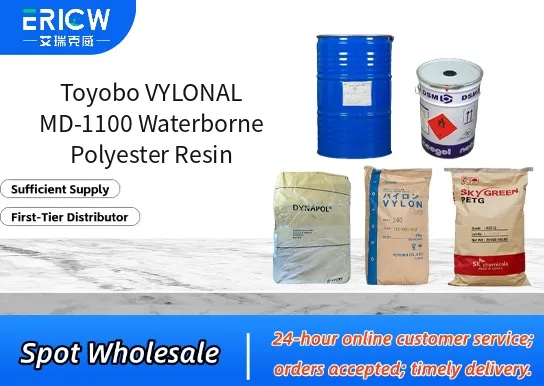
Low-VOC, water-based formulation compliant with stringent global environmental regulations.
Excellent film-forming capability and balanced hardness-flexibility balance for durable coatings.
Good compatibility with acrylic emulsions, crosslinkers (e.g., melamine and polyisocyanate types), and common additives.
Stable dispersion with low viscosity, enabling easy handling and efficient spray/roller application.
Enhanced hydrolytic stability due to optimized polyester backbone design and controlled acid value.
Waterborne industrial maintenance coatings for metal substrates.
High-performance topcoats for architectural pre-finished metal (PPM) and coil coating systems.
Basecoats and mid-coats in automotive refinish and OEM-compatible waterborne systems.
Functional coatings requiring chemical resistance and outdoor weatherability.
Eco-friendly wood finishes where low odor and rapid ambient drying are critical.
| Chemical Type | Waterborne polyester dispersion |
| Product Form | Liquid dispersion in aqueous medium |
| Appearance | Opaque white to off-white liquid |
| pH (25°C) | 7.5 – 8.5 |
| Solids Content (wt%) | 35.0 ± 1.5 |
| Viscosity (mPa·s, Brookfield RVT, #2 spindle, 20 rpm, 25°C) | 200 – 600 |
| Particle Size (D50, nm) | 80 – 120 |
| Minimum Film Formation Temperature (MFFT, °C) | 25 – 30 |
Q1: What is the primary function of VYLONAL MD-1100 in waterborne coating formulations?
A: VYLONAL MD-1100 functions as a film-forming binder and crosslinker promoter in waterborne polyester-based systems, enhancing hardness, chemical resistance, and substrate adhesion—particularly for metal and plastic substrates in industrial and decorative coatings.
Q2: Is VYLONAL MD-1100 compatible with common waterborne acrylic or polyurethane dispersions?
A: Yes, it is designed for broad compatibility with waterborne acrylics, polyurethanes, and hybrid dispersions. Compatibility should be verified in the final formulation through stability testing and application trials, especially when high solids content or specific coalescing agents are present.
Q3: How does VYLONAL MD-1100 contribute to curing performance in ambient- or low-bake conditions?
A: It enables effective self-crosslinking and co-crosslinking at mild temperatures (e.g., ambient drying or low-bake cycles up to 80–100 °C), supporting rapid development of mechanical properties without requiring strong acid catalysts or high-temperature ovens.
Q4: Can VYLONAL MD-1100 be used in food-contact compliant coatings?
A: While VYLONAL MD-1100 is formulated without intentionally added heavy metals or formaldehyde, its suitability for food-contact applications depends on full system compliance—including all raw materials, processing conditions, and regulatory evaluation by the end-user. Toyobo does not certify final formulations for food-contact use.
Contact With Us:
E-mail: wangxingqiang@ericwchem.com
Have a Questions? Call Us:
Add:
Building A1, Jiete Industrial Park, Huangpu District, Guangzhou City, Guangdong Province, China