English
 Español
 tiếng việt
 русский
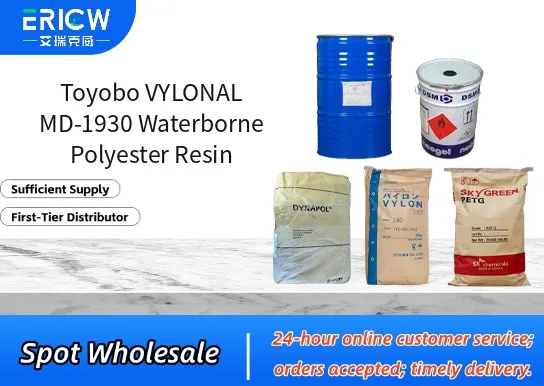
Low-VOC, water-based formulation compliant with stringent environmental regulations including EU REACH and US EPA guidelines.
Excellent film-forming capability with balanced hardness and flexibility for durable coating performance.
Superior compatibility with acrylic emulsions, amino resins, and common waterborne crosslinkers.
Good hydrolytic stability enabling extended shelf life under recommended storage conditions.
Low odor profile suitable for indoor applications and sensitive manufacturing environments.
Waterborne industrial maintenance coatings for metal substrates.
Interior architectural coatings requiring low emission and high scrub resistance.
Wood finishing systems including furniture and cabinetry topcoats.
Coil coating primers and topcoats for pre-painted metal applications.
Plastic substrate coatings where adhesion and flexibility are critical.
| Chemical Type | Waterborne saturated polyester dispersion |
| Product Form | Liquid dispersion |
| Appearance | Opaque white to off-white liquid |
| pH (at 25°C) | 7.5–8.5 |
| Solids Content (wt%) | 35–38% |
| Viscosity (mPa·s, Brookfield LVT, #2 spindle, 6 rpm) | 1,500–3,000 |
| Density (g/cm³, 25°C) | 1.02–1.05 |
| Storage Stability | ≥6 months at 5–30°C in sealed container |
Q1: What is the primary function of VYLONAL MD-1930 in waterborne coating formulations?
A: VYLONAL MD-1930 functions as a reactive crosslinker and film-forming aid, enhancing hardness, chemical resistance, and substrate adhesion in waterborne polyester-based coatings—particularly for industrial and decorative applications requiring low VOC content.
Q2: Is VYLONAL MD-1930 compatible with common waterborne acrylic or polyurethane dispersions?
A: Yes, it demonstrates good compatibility with many waterborne acrylics and anionic/cationic polyurethane dispersions. However, pre-testing in the final formulation is recommended to confirm stability, pot life, and cure performance under specific conditions.
Q3: What curing conditions are typically required for optimal performance?
A: Full crosslinking generally occurs at elevated temperatures (e.g., 120–160 °C), though ambient-cure capability may be achieved over extended time when combined with appropriate catalysts. Cure profile depends on film thickness, substrate, and co-resin selection.
Q4: How should VYLONAL MD-1930 be stored and handled to maintain stability?
A: Store in original sealed containers at 5–30 °C, away from freezing and direct sunlight. Avoid prolonged exposure to high humidity or strong oxidizing agents. The resin is supplied as a stable aqueous dispersion and does not require special solvents for handling.
Contact With Us:
E-mail: wangxingqiang@ericwchem.com
Have a Questions? Call Us:
Add:
Building A1, Jiete Industrial Park, Huangpu District, Guangzhou City, Guangdong Province, China