English
 Español
 tiếng việt
 русский
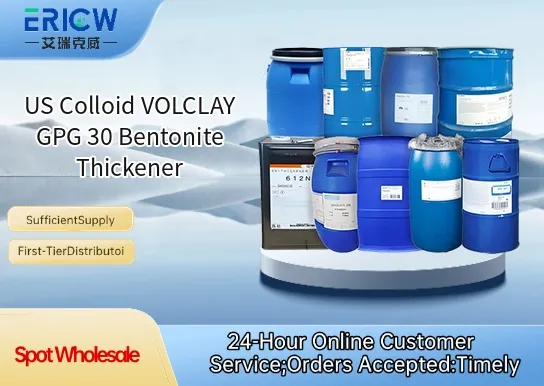
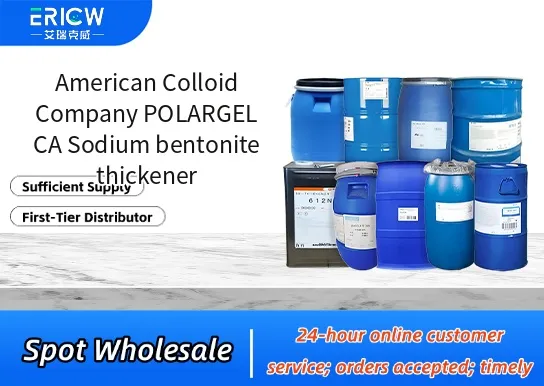
High-yield, sodium-activated bentonite offering exceptional rheological control in water-based systems.
Consistent performance across varying pH and electrolyte concentrations, ensuring formulation stability.
Low-dosage efficiency—delivers effective thickening and suspension at typical use levels of 0.2–1.5 wt%.
Free-flowing, dust-reduced granular form for improved handling and reduced airborne particulate exposure.
Manufactured to strict quality standards with batch-to-batch reproducibility and full traceability.
Water-based paints and architectural coatings requiring sag resistance and anti-settling properties.
Drilling muds and geotechnical grouts where controlled viscosity and fluid loss reduction are critical.
Ceramic glazes and slip casting formulations needing suspension stability and thixotropic recovery.
Adhesives and construction mortars requiring enhanced green strength and workability retention.
Agrochemical suspensions and pesticide formulations requiring long-term particle dispersion stability.
| Chemical Type | Sodium-activated bentonite clay |
| Product Form | Free-flowing granules |
| Appearance | Light tan to grayish granular powder |
| Moisture Content (max) | 8.0% w/w |
| Particle Size (95% passing) | 75 µm (200 mesh) |
| Yield (American Petroleum Institute) | ≥30 bbl/ton (in fresh water) |
| pH (10% slurry in distilled water) | 8.5–10.0 |
| Primary Applications | Rheology modifier, suspending agent, and gelling agent in aqueous systems |
Q1: What is the primary function of VOLCLAY GPG 30 in formulations?
A: VOLCLAY GPG 30 is a sodium-activated bentonite clay designed to provide efficient rheological control—primarily suspension stabilization, viscosity enhancement, and yield stress development—in water-based systems such as coatings, adhesives, sealants, and construction mortars.
Q2: How does VOLCLAY GPG 30 differ from standard bentonite thickeners?
A: VOLCLAY GPG 30 is specifically surface-modified for improved dispersibility and faster hydration in aqueous environments, offering more consistent thickening performance and reduced gel lumps compared to unprocessed or conventionally milled bentonites. It is optimized for use in low-shear mixing processes typical in industrial manufacturing.
Q3: Is VOLCLAY GPG 30 compatible with common additives like defoamers, biocides, or co-thickeners?
A: Yes, VOLCLAY GPG 30 generally exhibits good compatibility with a broad range of formulation components, including nonionic surfactants, common preservatives, and other rheology modifiers such as associative thickeners or cellulose ethers—though compatibility testing under actual processing and storage conditions is recommended for critical applications.
Q4: What are typical handling and dispersion best practices for this product?
A: For optimal performance, disperse VOLCLAY GPG 30 gradually into water or aqueous phase under moderate agitation to avoid agglomeration. Pre-wetting with glycols or alcohol/water blends may improve dispersion efficiency in certain high-solids or low-water systems. Avoid prolonged high-shear processing after full hydration to preserve its structured network.
Contact With Us:
E-mail: wangxingqiang@ericwchem.com
Have a Questions? Call Us:
Add:
Building A1, Jiete Industrial Park, Huangpu District, Guangzhou City, Guangdong Province, China