English
 Español
 tiếng việt
 русский
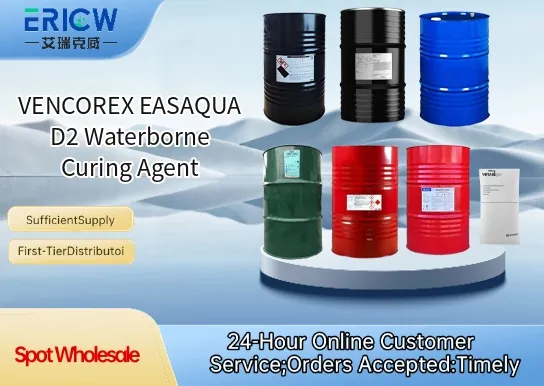
Waterborne polyamine-based curing agent enabling low-VOC, high-performance epoxy systems.
Excellent compatibility with standard waterborne epoxy dispersions and resins.
Fast ambient-cure kinetics without requiring forced drying or elevated temperatures.
Superior chemical resistance and adhesion to concrete, steel, and aged coatings.
Low odor and non-hazardous classification per GHS, supporting safer workplace handling.
Waterborne epoxy floor coatings for industrial and commercial facilities.
Concrete repair and protective topcoats in infrastructure and parking structures.
Low-VOC maintenance coatings for food processing and pharmaceutical environments.
Hybrid epoxy-acrylic hybrid systems for architectural and decorative finishes.
Two-component waterborne epoxy primers for metal substrates and galvanized steel.
| Chemical Type | Waterborne polyamine adduct |
| Product Form | Liquid |
| Appearance | Pale yellow to amber, clear to slightly hazy liquid |
| pH (10% aqueous solution) | 9.5 – 10.5 |
| Solids Content (wt %) | 55 – 60 |
| Viscosity (mPa·s, 25°C) | 300 – 800 |
| Density (g/cm³, 20°C) | 1.05 – 1.10 |
| Primary Applications | Waterborne epoxy two-pack systems for protective and decorative coatings |
Q1: What types of waterborne resins is EASAQUA D2 compatible with?
A: EASAQUA D2 is specifically designed for use with waterborne polyurethane dispersions (PUDs), acrylic emulsions, and hybrid polymer systems. It provides efficient crosslinking while maintaining colloidal stability during formulation and storage.
Q2: How does EASAQUA D2 affect film formation and final coating properties?
A: It enhances hardness, chemical resistance, and scrub resistance without significantly compromising flexibility or low-temperature film formation. The resulting films typically exhibit improved mar resistance and reduced water sensitivity compared to uncrosslinked systems.
Q3: What is the recommended addition method and timing for optimal performance?
A: EASAQUA D2 should be added under gentle agitation during the final stage of formulation, after pH adjustment and cooling. Pre-dilution with deionized water is recommended to ensure uniform dispersion. Avoid high-shear mixing post-addition to prevent destabilization of the system.
Q4: Is EASAQUA D2 suitable for low-VOC or zero-VOC formulations?
A: Yes — as a waterborne curing agent with negligible VOC content and no added solvents or formaldehyde donors, it supports compliance with stringent low-VOC regulatory frameworks and sustainability targets for architectural, industrial, and specialty coatings.
Contact With Us:
E-mail: wangxingqiang@ericwchem.com
Have a Questions? Call Us:
Add:
Building A1, Jiete Industrial Park, Huangpu District, Guangzhou City, Guangdong Province, China