English
 Español
 tiếng việt
 русский
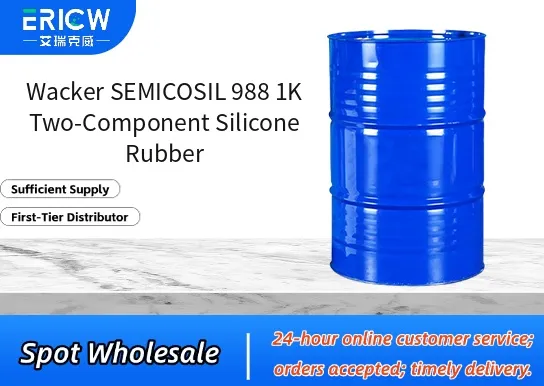
Platinum-catalyzed addition-cure system enabling precise, controllable vulcanization without by-products.
Excellent high-temperature stability with continuous service capability up to 180 °C.
Outstanding electrical insulation properties and low dielectric loss across wide frequency ranges.
Good adhesion to various substrates including metals, plastics, and cured silicone surfaces.
Low viscosity before curing for easy dispensing, mixing, and void-free encapsulation.
Encapsulation and potting of power electronics, IGBT modules, and EV battery control units.
Thermal interface materials (TIMs) for heat dissipation in LED drivers and power converters.
Insulating coatings for high-voltage sensors and automotive ignition components.
Sealing and bonding of precision optical housings and medical device assemblies.
Protective overmolding of flexible printed circuits (FPCs) and hybrid microelectronics.
| Chemical Type | Platinum-catalyzed addition-curing silicone rubber |
| Product Form | Two-component liquid system (Part A + Part B) |
| Appearance | Transparent, low-viscosity liquids (Part A: clear; Part B: faintly amber) |
| Base Polymer | Dimethyl/methylvinyl polysiloxane (Part A), methylhydrogen polysiloxane + platinum complex (Part B) |
| Mixing Ratio (by weight) | 1:1 (A:B) |
| Cure Mechanism | Addition reaction (hydrosilylation) |
| Shore A Hardness (cured, 7 days @ 23 °C) | 55 ± 3 |
| Density (23 °C, g/cm³) | 1.06 ± 0.02 |
Contact With Us:
E-mail: wangxingqiang@ericwchem.com
Have a Questions? Call Us:
Add:
Building A1, Jiete Industrial Park, Huangpu District, Guangzhou City, Guangdong Province, China