English
 Español
 tiếng việt
 русский
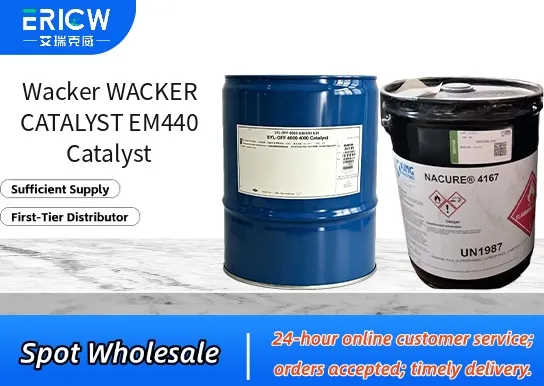
Highly selective palladium-based heterogeneous catalyst for efficient hydrosilylation reactions.
Thermally stable up to 180 °C, enabling robust performance in continuous-process industrial reactors.
Low metal leaching (<0.5 ppm Pd) ensures product purity and reduces downstream purification costs.
Consistent batch-to-batch reproducibility supported by WACKER’s certified quality control system.
Designed for easy handling and integration into existing silicone and specialty chemical production lines.
Production of functional silicones, including vinyl-functional siloxanes and silane coupling agents.
Hydrosilylation of olefins for silicone surfactants and emulsifiers used in personal care formulations.
Synthesis of silicone-modified polymers for high-performance coatings and adhesives.
Manufacturing of platinum-free silicone elastomers requiring precise crosslinking control.
Catalytic synthesis of organosilicon intermediates in pharmaceutical and agrochemical fine chemical processes.
| Chemical Type | Palladium on activated carbon support |
| Product Form | Free-flowing black granular solid |
| Appearance | Black granules, non-dusting |
| Palladium Content | 0.5 wt% ± 0.05 wt% |
| Moisture Content | ≤ 1.0 wt% |
| Particle Size Range | 0.5–2.0 mm |
| Storage Condition | Store under inert atmosphere at 5–25 °C, protected from moisture and light |
| Primary Applications | Hydrosilylation, silicone functionalization, specialty organosilicon synthesis |
Q1: What is the primary function of WACKER CATALYST EM440 in silicone formulations?
A: WACKER CATALYST EM440 is a platinum-based hydrosilylation catalyst designed to promote efficient crosslinking between Si–H and vinyl-functional siloxanes, enabling rapid and controlled cure at elevated temperatures in addition-cure liquid silicone rubber (LSR) and high-consistency rubber (HCR) systems.
Q2: Is EM440 suitable for food-contact or medical-grade silicone applications?
A: EM440 is formulated for high-purity performance and is commonly selected in applications requiring low extractables and minimal odor. While it meets typical purity expectations for sensitive end uses, final regulatory compliance depends on the complete formulation, processing conditions, and applicable regional requirements—validation must be performed by the compounder.
Q3: How should EM440 be handled and stored to maintain catalytic activity?
A: Store in original sealed containers under inert atmosphere (e.g., nitrogen), protected from moisture, light, and ambient air. Keep at temperatures between 5 °C and 25 °C. Avoid contact with heavy metals, sulfur-, phosphorus-, or nitrogen-containing compounds, which may inhibit platinum activity.
Q4: Can EM440 be used in low-temperature curing processes?
A: EM440 is optimized for thermal activation and typically requires elevated cure temperatures (e.g., 100–180 °C) to achieve full reactivity. It is not recommended for room-temperature or latent-cure systems where extended pot life or cold-start behavior is required.
Q5: What is the typical dosage range for EM440 in standard LSR compounds?
A: Dosage is formulation-dependent but generally ranges from 0.1% to 2% by weight relative to the base polymer, adjusted based on desired cure speed, final physical properties, and inhibition sensitivity. Lower concentrations are often sufficient for fast-cure applications when combined with appropriate Si–H/vinyl stoichiometry.
Contact With Us:
E-mail: wangxingqiang@ericwchem.com
Have a Questions? Call Us:
Add:
Building A1, Jiete Industrial Park, Huangpu District, Guangzhou City, Guangdong Province, China