English
 Español
 tiếng việt
 русский
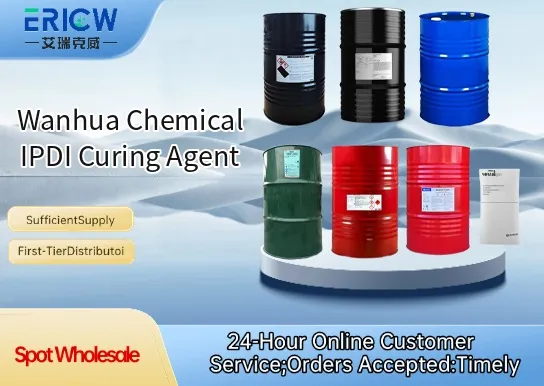
High chemical resistance to solvents, acids, and alkalis.
Excellent UV stability and low yellowing tendency in clear coatings.
Low viscosity for easy handling and improved formulation flexibility.
Fast reactivity with hydroxyl-functional resins at ambient and elevated temperatures.
Low volatile organic compound (VOC) content, supporting sustainable coating systems.
High-performance automotive clearcoats and basecoats.
Precision optical coatings for lenses and displays.
Industrial maintenance coatings for machinery and infrastructure.
Wood finishing systems requiring durability and clarity.
Plastic coatings for electronics housings and consumer goods.
| Chemical Type | Isophorone diisocyanate (IPDI)-based aliphatic polyisocyanate |
| Product Form | Liquid |
| Appearance | Clear, colorless to pale yellow liquid |
| NCO Content (wt%) | 18.5–19.2 |
| Viscosity (25°C, mPa·s) | 800–1,200 |
| Specific Gravity (25°C) | 1.17–1.20 |
| Flash Point (°C, closed cup) | 135–145 |
| Storage Stability | ≥12 months at 25°C in sealed container |
Q1: What is the primary function of Wanhua Chemical IPDI Curing Agent in coating and adhesive formulations?
A: It serves as a highly reactive aliphatic isocyanate crosslinker, enabling excellent weather resistance, gloss retention, and mechanical durability in two-component polyurethane systems—particularly where UV stability and non-yellowing performance are critical.
Q2: How does this IPDI-based curing agent compare to aromatic alternatives like TDI or MDI?
A: Unlike aromatic isocyanates, Wanhua’s IPDI curing agent offers superior light stability and resistance to yellowing, making it suitable for exterior coatings, clear topcoats, and applications requiring long-term color fidelity—without compromising reactivity or film hardness development.
Q3: Is this product compatible with common hydroxyl-functional resins such as acrylics, polyesters, and alkyds?
A: Yes—it exhibits broad compatibility with standard OH-functional binder resins used in industrial and automotive coatings, delivering consistent gel times, pot life control, and full cure at ambient or elevated temperatures depending on catalyst selection and formulation design.
Q4: What handling precautions should be observed during storage and processing?
A: As with all isocyanates, it must be protected from moisture and stored under dry nitrogen in sealed containers. Avoid exposure to humidity, water, or strong bases. Use appropriate PPE—including chemical-resistant gloves and respiratory protection when handling uncured material—in well-ventilated areas.
Contact With Us:
E-mail: wangxingqiang@ericwchem.com
Have a Questions? Call Us:
Add:
Building A1, Jiete Industrial Park, Huangpu District, Guangzhou City, Guangdong Province, China