English
 Español
 tiếng việt
 русский
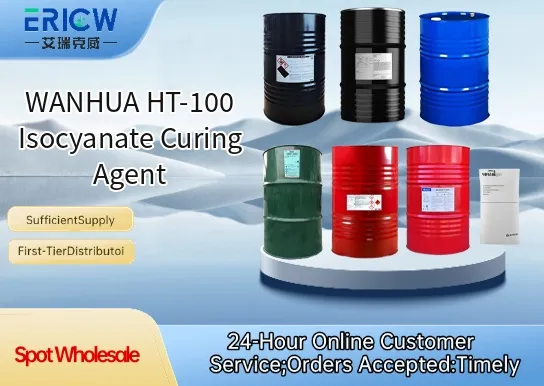
High reactivity with hydroxyl-functional resins, enabling rapid room-temperature or low-bake curing.
Excellent compatibility with polyols, acrylics, and polyester resins for uniform film formation.
Low viscosity formulation ensures easy handling, precise metering, and improved sprayability.
Enhanced chemical resistance and mechanical durability in cured coatings and adhesives.
Compliant with REACH and meets stringent VOC emission requirements for industrial applications.
Automotive OEM and refinish clearcoats and basecoats.
Industrial maintenance coatings for metal and concrete substrates.
High-performance two-component polyurethane adhesives for transportation assembly.
Wood finishing systems requiring fast cure, hardness, and gloss retention.
Plastic coating systems for automotive interior and exterior components.
| Chemical Type | Aliphatic polyisocyanate (hexamethylene diisocyanate-based trimer) |
| Product Form | Liquid |
| Appearance | Clear, pale yellow to colorless liquid |
| NCO Content (wt%) | 15.5–16.5% |
| Viscosity at 25°C (mPa·s) | 800–1,200 |
| Density at 25°C (g/cm³) | 1.18–1.22 |
| Flash Point (°C, closed cup) | 125–135 |
| Storage Stability | 12 months at <25°C in sealed containers under dry nitrogen |
Q1: What types of resins is HT-100 compatible with?
A: HT-100 is specifically formulated for use with hydroxyl-functional acrylics, polyesters, and alkyd resins in two-component polyurethane coating systems. It exhibits good reactivity and storage stability when paired with these common binder types under standard formulation conditions.
Q2: How should HT-100 be handled and stored to maintain performance?
A: HT-100 should be stored in tightly sealed containers under dry, cool conditions—preferably below 30 °C—and protected from moisture, direct sunlight, and ambient humidity. Avoid prolonged exposure to air during handling, as isocyanates are moisture-sensitive and may form surface skins or gel over time if not properly sealed.
Q3: Does HT-100 require a catalyst for full cure, and what is its typical pot life?
A: HT-100 reacts efficiently without mandatory catalyst addition, though tertiary amine or organometallic catalysts may be used to adjust cure speed depending on application requirements. Pot life varies with temperature, resin functionality, and NCO:OH ratio, but generally ranges from 4 to 8 hours at 23 °C in standard coating formulations.
Q4: Can HT-100 be used in low-VOC or high-solids coatings?
A: Yes—HT-100 is well-suited for low-VOC and high-solids formulations due to its high NCO content and low volatility. Its reactivity profile supports efficient crosslinking with minimal solvent demand, helping formulators meet evolving environmental and regulatory expectations without compromising film integrity.
Q5: What safety precautions are essential when working with HT-100?
A: As with all aromatic isocyanate-based curing agents, appropriate personal protective equipment—including nitrile gloves, chemical-resistant goggles, and respiratory protection against aerosols and vapors—is required. Ensure adequate ventilation in mixing and application areas, and consult the Safety Data Sheet (SDS) for detailed handling, first aid, and emergency response guidance.
Contact With Us:
E-mail: wangxingqiang@ericwchem.com
Have a Questions? Call Us:
Add:
Building A1, Jiete Industrial Park, Huangpu District, Guangzhou City, Guangdong Province, China