English
 Español
 tiếng việt
 русский
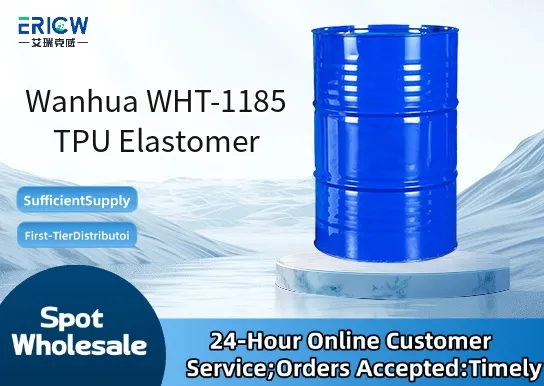
Excellent abrasion resistance for extended service life in demanding mechanical environments.
Outstanding low-temperature flexibility down to –40 °C without embrittlement.
Good oil and grease resistance, maintaining performance in lubricated or hydrocarbon-exposed conditions.
High tensile strength and elongation at break, enabling robust dynamic part design.
Compatible with common thermoplastic processing methods including extrusion, injection molding, and calendering.
Automotive interior trim components such as gear knobs, door panels, and instrument cluster overlays.
Industrial hoses and tubing requiring flexibility, kink resistance, and chemical resilience.
Footwear midsoles and outsoles demanding rebound, durability, and weather resistance.
Conveyor belts and drive belts where wear resistance and load-bearing capacity are critical.
Medical tubing and fluid-handling components meeting ISO 10993-compatibility requirements.
| Chemical Type | Thermoplastic Polyurethane (TPU), Polyester-based |
| Product Form | Pellets |
| Appearance | Off-white to light yellow translucent granules |
| Primary Applications | Extrusion, injection molding, calendering |
| Key Features | Abrasion resistance, low-temperature flexibility, oil resistance |
| Benefits | Enhanced part longevity, process efficiency, design freedom |
| Density (g/cm³) | 1.18–1.22 |
| Melt Flow Index (230 °C/2.16 kg, g/10 min) | 10–14 |
Q1: What are the key processing advantages of WHT-1185 compared to conventional thermoplastic polyurethanes?
A: WHT-1185 offers enhanced melt stability and lower melt viscosity during extrusion and injection molding, enabling smoother flow through complex tooling and reduced energy consumption. Its optimized thermal profile also supports faster cycle times without compromising surface finish or mechanical integrity.
Q2: Is WHT-1185 suitable for applications requiring resistance to hydrolysis and low-temperature flexibility?
A: Yes — WHT-1185 is formulated with hydrolysis-stable polyester-based chemistry and demonstrates excellent retention of elasticity and tensile performance after prolonged exposure to humid or warm environments. It maintains good flexibility down to approximately −30 °C, making it appropriate for outdoor and automotive under-hood components.
Q3: Can WHT-1185 be co-extruded or overmolded with common engineering plastics such as ABS, PC, or PP?
A: WHT-1185 exhibits good interfacial adhesion with several polar engineering resins including ABS and PC when processed under optimized temperature and residence time conditions. Adhesion to non-polar substrates like PP typically requires surface pretreatment or a compatibilizing tie-layer for reliable bonding.
Q4: What drying recommendations should be followed prior to processing WHT-1185?
A: As a moisture-sensitive polyester TPU, WHT-1185 must be thoroughly dried before processing. Recommended drying conditions are 80–90 °C for 3–4 hours in a desiccant dryer, achieving a moisture content below 0.05% to prevent degradation, surface defects, or loss of mechanical properties.
Contact With Us:
E-mail: wangxingqiang@ericwchem.com
Have a Questions? Call Us:
Add:
Building A1, Jiete Industrial Park, Huangpu District, Guangzhou City, Guangdong Province, China