English
 Español
 tiếng việt
 русский
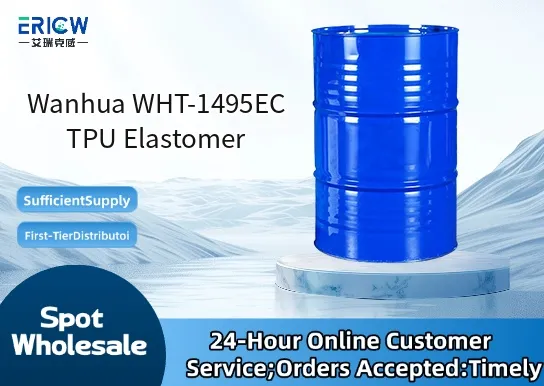
Excellent abrasion resistance for extended service life in demanding mechanical environments.
Outstanding low-temperature flexibility down to –30 °C without significant loss of elasticity.
Good oil and grease resistance, maintaining integrity in contact with hydrocarbon-based lubricants.
High tensile strength and elongation at break, enabling reliable performance under dynamic stress.
Excellent processability via extrusion, injection molding, and calendering with minimal thermal degradation.
Automotive interior trim components including instrument panel skins and door armrests.
Industrial hoses and fluid-conveying tubing requiring flexibility and chemical resilience.
Consumer electronics protective cases and wearable device straps demanding soft-touch feel and durability.
Medical tubing and non-implantable device housings compliant with ISO 10993-5 cytotoxicity requirements.
Roller covers and precision rollers for printing, packaging, and paper handling equipment.
| Chemical Type | Aliphatic polyester-based thermoplastic polyurethane |
| Product Form | Pellets |
| Appearance | Off-white to light yellow translucent granules |
| Hardness (Shore A) | 95 ± 2 |
| Density (g/cm³) | 1.18–1.22 |
| Melt Flow Index (230 °C/2.16 kg, g/10 min) | 10–14 |
| Tensile Strength (MPa) | ≥35 |
| Elongation at Break (%) | ≥450 |
Q1: What is the primary function of WHT-1495EC in TPU formulations?
A: WHT-1495EC is a specialized thermoplastic polyurethane (TPU) elastomer modifier designed to enhance melt processability and improve surface finish in extruded or injection-molded TPU parts, particularly in demanding thin-wall or high-gloss applications.
Q2: Is WHT-1495EC compatible with all common TPU base resins?
A: WHT-1495EC demonstrates broad compatibility with aromatic and aliphatic polyester- and polyether-based TPUs. Optimal performance is typically achieved when blended with medium-to-high molecular weight TPUs; compatibility testing under actual processing conditions is recommended for new formulations.
Q3: How should WHT-1495EC be incorporated into TPU compounds?
A: It is typically added via dry blending prior to extrusion or injection molding. For best dispersion, pre-mixing with the base TPU at low shear followed by gentle melt compounding is advised. Avoid prolonged residence time at elevated temperatures to preserve its functional integrity.
Q4: Does WHT-1495EC affect the mechanical properties of the final TPU product?
A: At typical use levels, WHT-1495EC maintains core mechanical performance—including tensile strength, elongation, and abrasion resistance—while improving flow and surface aesthetics. Significant deviations from recommended dosage ranges may influence modulus and recovery behavior, so formulation optimization is encouraged.
Q5: What are the recommended storage conditions for WHT-1495EC?
A: Store in original sealed packaging in a cool, dry, well-ventilated area away from direct sunlight and heat sources. Prolonged exposure to ambient humidity may require drying prior to processing, consistent with standard TPU handling practices.
Contact With Us:
E-mail: wangxingqiang@ericwchem.com
Have a Questions? Call Us:
Add:
Building A1, Jiete Industrial Park, Huangpu District, Guangzhou City, Guangdong Province, China