English
 Español
 tiếng việt
 русский
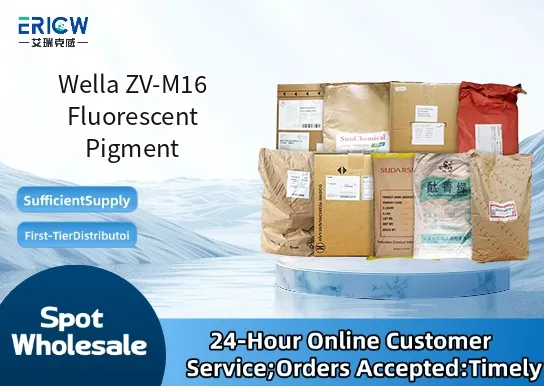
High-intensity fluorescence under UV-A (365 nm) and visible blue light excitation.
Excellent thermal stability up to 220°C, suitable for medium-temperature processing.
Good compatibility with common thermoplastic resins including ABS, PS, and acrylics.
Non-bleeding formulation ensures color integrity in polymer blends and coatings.
Low migration tendency in PVC and flexible film applications.
Safety signage and emergency egress markings.
UV-responsive packaging films and tamper-evident labels.
Fluorescent inks for security printing and brand authentication.
Decorative plastic components in consumer electronics housings.
High-visibility industrial tapes and reflective safety apparel substrates.
| Chemical Type | Organic fluorescent dye derivative |
| Product Form | Fine free-flowing powder |
| Appearance | Bright yellow-green powder (dry state), vivid green-yellow fluorescence (wet/UV-excited) |
| Primary Applications | Polymer masterbatches, solvent-based inks, UV-curable coatings |
| Key Features | UV-stable, non-metallic, REACH-compliant |
| Benefits | Consistent batch-to-batch performance, low dust generation, easy dispersion |
| Storage Conditions | Store in cool, dry, dark place; protect from moisture and direct sunlight |
| Regulatory Status | Compliant with EU Directive 2002/72/EC for food-contact plastics (subject to concentration limits) |
Q1: What types of resin systems is Wella ZV-M16 compatible with?
A: Wella ZV-M16 exhibits good compatibility with a broad range of thermoplastic and thermosetting systems, including ABS, PS, PVC, PMMA, and unsaturated polyesters. Compatibility should be verified in the final formulation due to potential interactions with additives or stabilizers.
Q2: How stable is this pigment under UV exposure and elevated processing temperatures?
A: Wella ZV-M16 is engineered for enhanced thermal stability during standard polymer processing (e.g., injection molding, extrusion) and offers moderate resistance to UV-induced fading. For long-term outdoor applications, co-stabilization with appropriate UV absorbers or HALS is recommended.
Q3: Is Wella ZV-M16 suitable for use in food-contact plastics?
A: Wella ZV-M16 is not certified for direct food-contact applications. It is intended for decorative, industrial, or functional non-food-grade uses. Regulatory compliance must be confirmed separately for each target market and application.
Q4: What is the typical dosage range for achieving strong fluorescent effect in plastics?
A: The pigment is typically used at low concentrations — generally ranging from 0.1% to 2% by weight — depending on the base polymer, desired intensity, and processing method. Optimal loading should be determined via small-scale trials to balance performance, dispersion quality, and cost efficiency.
Contact With Us:
E-mail: wangxingqiang@ericwchem.com
Have a Questions? Call Us:
Add:
Building A1, Jiete Industrial Park, Huangpu District, Guangzhou City, Guangdong Province, China