English
 Español
 tiếng việt
 русский
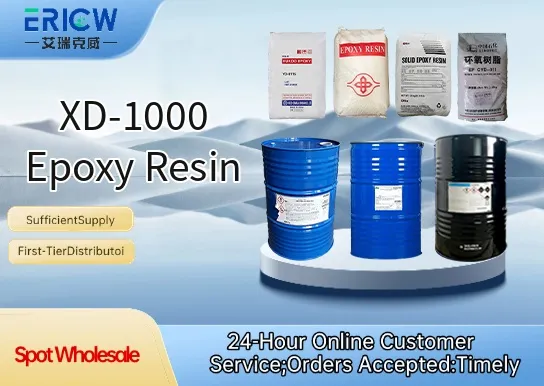
High purity bisphenol-A based epoxy resin with consistent molecular weight distribution.
Excellent adhesion to metals, composites, and cured concrete substrates.
Low viscosity (12,000–14,000 cP at 25°C) enabling easy processing and impregnation.
Superior chemical resistance to alkalis, dilute acids, and solvents after full cure.
Optimized for room-temperature and elevated-temperature curing with standard amine hardeners.
Structural adhesives for aerospace and automotive bonding.
Matrix resin in fiber-reinforced polymer (FRP) composites for wind turbine blades.
Protective coatings for offshore steel structures and chemical storage tanks.
Electrical encapsulation and potting compounds for high-voltage insulation.
Repair mortars and grouts for industrial flooring and concrete rehabilitation.
| Chemical Type | Bisphenol-A diglycidyl ether (DGEBA) |
| Product Form | Liquid, low-viscosity resin |
| Appearance | Pale yellow, transparent liquid |
| Epoxy Equivalent Weight (EEW) | 188–194 g/eq |
| Viscosity (25°C) | 12,000–14,000 cP |
| Chloride Content | < 800 ppm |
| Volatiles (105°C, 2 hrs) | < 0.3 wt% |
| Storage Stability | 12 months at 20–25°C in sealed containers |
Q1: What is the primary function of XD-1000 Epoxy Resin in coating and adhesive formulations?
A: XD-1000 serves as a reactive diluent and viscosity modifier, enhancing flow, improving substrate wetting, and contributing to crosslink density without significantly compromising thermal or chemical resistance.
Q2: Is XD-1000 compatible with standard amine and anhydride curing agents?
A: Yes, XD-1000 demonstrates broad compatibility with common epoxy hardeners, including aliphatic and cycloaliphatic amines as well as aromatic anhydrides, supporting flexible formulation design across ambient and elevated cure schedules.
Q3: How does XD-1000 affect pot life and gel time in epoxy systems?
A: As a low-viscosity reactive diluent, XD-1000 typically extends working time compared to unmodified bisphenol-A resins, though the extent depends on hardener selection and temperature—formulators should conduct small-scale trials to optimize processing windows.
Q4: Can XD-1000 be used in high-solids or solvent-free epoxy systems?
A: Yes, its low volatility and reactive nature make it well-suited for high-solids and 100% solids epoxy formulations, helping maintain low VOC content while supporting film integrity and mechanical performance.
Contact With Us:
E-mail: wangxingqiang@ericwchem.com
Have a Questions? Call Us:
Add:
Building A1, Jiete Industrial Park, Huangpu District, Guangzhou City, Guangdong Province, China