English
 Español
 tiếng việt
 русский
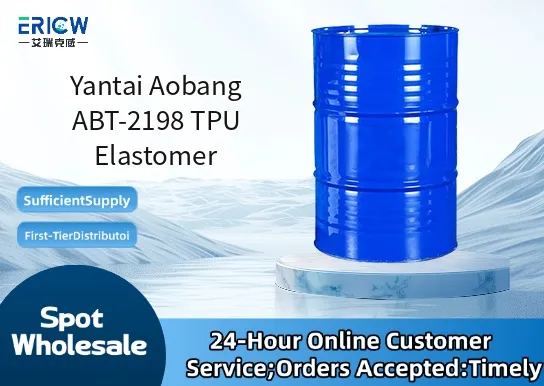
Excellent abrasion resistance for extended service life in demanding mechanical environments.
Superior oil and grease resistance, maintaining performance in lubricated or hydrocarbon-exposed conditions.
Broad operating temperature range from –40 °C to +80 °C, ensuring dimensional stability and elasticity across climates.
High tensile strength and elongation at break, enabling reliable dynamic flexing and impact absorption.
Good processability via injection molding, extrusion, and calendering with low melt viscosity and narrow processing window.
Automotive interior trim components including instrument panel skins and door armrests.
Industrial rollers and conveyor belts requiring high wear resistance and load-bearing resilience.
Flexible hoses and tubing for pneumatic and hydraulic systems in machinery and equipment.
Footwear midsoles and outsoles offering lightweight cushioning and durable traction.
Protective covers and gaskets for electronic enclosures and medical device housings.
| Chemical Type | Thermoplastic Polyurethane (TPU), Polyester-based |
| Product Form | Pellets |
| Appearance | Translucent light amber granules |
| Primary Applications | Injection molding, extrusion, calendering |
| Key Features | Abrasion resistance, oil resistance, flexibility, thermal stability |
| Benefits | Reduced part wear, extended component lifespan, consistent processing behavior |
| Density (g/cm³) | 1.18–1.22 |
| Melt Flow Index (230 °C/2.16 kg, g/10 min) | 10–14 |
Q1: What is the primary application domain for ABT-2198?
A: ABT-2198 is a thermoplastic polyurethane elastomer specifically engineered for high-performance flexible film and sheet applications, including protective coatings, inflatable components, and soft-touch overmolding—particularly where excellent melt processability and low-temperature flexibility are required.
Q2: Is ABT-2198 suitable for extrusion and thermoforming processes?
A: Yes—ABT-2198 exhibits good melt stability and uniform melt viscosity, making it well-suited for cast film extrusion, blow film, and vacuum or pressure thermoforming. Optimal processing typically occurs within standard TPU temperature ranges without requiring specialized equipment modifications.
Q3: How does ABT-2198 compare to conventional polyester-based TPUs in terms of hydrolytic stability?
A: As a polyether-type TPU, ABT-2198 offers significantly enhanced resistance to hydrolysis compared to many polyester-based alternatives—making it preferred for long-term outdoor use or humid environments where moisture exposure may affect mechanical integrity.
Q4: Can ABT-2198 be blended with other polymers?
A: ABT-2198 demonstrates reasonable compatibility with certain engineering thermoplastics such as PC and ABS in targeted alloy formulations; however, compatibility should always be verified experimentally for each intended blend ratio and end-use requirement due to potential phase separation risks.
Q5: Does ABT-2198 require drying before processing?
A: Yes—like most TPUs, ABT-2198 is hygroscopic and must be thoroughly dried prior to melt processing. Recommended drying conditions are typically 80–90 °C for 3–4 hours using dehumidifying or hot-air dryers to achieve moisture content below 0.05%.
Contact With Us:
E-mail: wangxingqiang@ericwchem.com
Have a Questions? Call Us:
Add:
Building A1, Jiete Industrial Park, Huangpu District, Guangzhou City, Guangdong Province, China