English
 Español
 tiếng việt
 русский
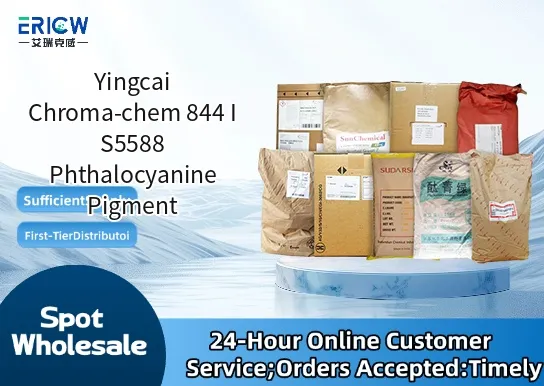
High chromatic strength and excellent color purity in intense phthalocyanine blue shade.
Outstanding thermal stability up to 220°C, suitable for high-temperature processing applications.
Superior lightfastness (ASTM Level 7–8) and weather resistance in outdoor exposure conditions.
Good dispersibility in both polar and non-polar organic media, including acrylics, polyurethanes, and PVC plastisols.
Low heavy metal content, compliant with EU REACH and RoHS directives for restricted substances.
Automotive coatings requiring high durability and gloss retention.
Industrial maintenance paints for corrosion-resistant steel and aluminum substrates.
Plastic coloration of engineering thermoplastics such as ABS, PS, and PP.
High-performance inks for flexographic and gravure printing on packaging films.
Architectural coatings demanding long-term color stability under UV exposure.
| Chemical Type | Copper phthalocyanine (CuPc), alpha-crystal form |
| Product Form | Fine dry powder |
| Appearance | Deep greenish-blue free-flowing powder |
| Primary Applications | Coatings, plastics, inks |
| Key Features | High tinting strength, excellent dispersion, low oil absorption |
| Benefits | Reduced dosage requirement, improved batch consistency, minimal filter clogging |
| Heat Stability | ≥220°C (30 min, air atmosphere) |
| Lightfastness (ISO 105-B02) | Grade 7–8 |
Q1: What are the key performance advantages of Yingcai Chroma-chem 844 I S5588 compared to standard copper phthalocyanine pigments?
A: This grade offers enhanced thermal stability and improved dispersibility in polar polymer matrices, supporting consistent color development during high-shear processing. Its optimized particle size distribution contributes to higher tinting strength and reduced filter pressure buildup in demanding ink and coating applications.
Q2: Is this pigment suitable for use in food-contact plastics or packaging inks?
A: Yingcai Chroma-chem 844 I S5588 is designed for general industrial applications and is not pre-certified for direct food contact. Customers requiring compliance with food-contact regulations must conduct full formulation-level testing and verification against applicable regional requirements before commercial use.
Q3: How should this pigment be dispersed for optimal performance in solvent-based inks?
A: For solvent-based systems, recommended dispersion involves high-speed stirring followed by bead milling using ceramic or zirconia media. Pre-wetting with compatible solvents (e.g., aromatic hydrocarbons or ketones) prior to milling improves deagglomeration and helps achieve stable, low-viscosity dispersions with minimal gloss loss.
Q4: Can this pigment be used in water-based architectural coatings without compromising stability?
A: Yes — when properly formulated with appropriate anionic or nonionic dispersants and pH control, Yingcai Chroma-chem 844 I S5588 demonstrates good compatibility and long-term colloidal stability in water-based acrylic and vinyl emulsion systems, delivering uniform blue-green shade and resistance to flocculation under ambient storage conditions.
Contact With Us:
E-mail: wangxingqiang@ericwchem.com
Have a Questions? Call Us:
Add:
Building A1, Jiete Industrial Park, Huangpu District, Guangzhou City, Guangdong Province, China