English
 Español
 tiếng việt
 русский
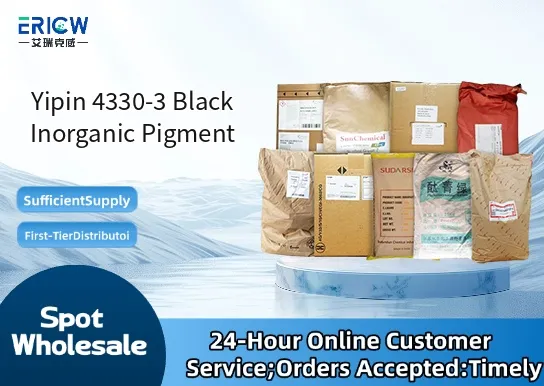
High thermal stability up to 800 °C, suitable for high-temperature processing environments.
Excellent UV resistance and lightfastness, ensuring long-term color retention in outdoor applications.
Non-toxic and heavy-metal-free formulation, compliant with RoHS and REACH regulatory requirements.
Superior dispersion performance in both aqueous and solvent-based systems without agglomeration.
Consistent particle size distribution for uniform color strength and minimal batch-to-batch variation.
Ceramic glazes and underglaze decorations for tableware and architectural tiles.
High-performance coatings for automotive refinish and industrial equipment.
Engineering plastics including polyamide (PA), polypropylene (PP), and polyesters (PBT/PET).
Specialty inks for heat-transfer printing and ceramic decal transfer.
Fire-resistant building materials such as intumescent paints and flame-retardant composites.
| Chemical Type | Mixed Metal Oxide (Fe–Cr–Mn–Ni spinel) |
| Product Form | Fine dry powder |
| Appearance | Jet-black free-flowing powder |
| Primary Applications | Ceramics, high-temp coatings, engineering plastics, specialty inks |
| Key Features | Thermal stability, UV resistance, non-toxicity, excellent dispersibility |
| Benefits | Color consistency, regulatory compliance, process robustness, low dust generation |
| pH (10% aqueous slurry) | 6.5 – 7.5 |
| Moisture Content (max) | 0.5 wt% |
Q1: What is the primary chemical composition of Yipin 4330-3?
A: Yipin 4330-3 is a mixed-metal oxide black pigment, primarily based on iron and manganese oxides, engineered for high thermal stability and chemical inertness in demanding industrial applications.
Q2: Is this pigment suitable for use in food-contact plastics?
A: Yes — Yipin 4330-3 is formulated to meet general requirements for pigments used in food-contact polymer applications, provided final formulations comply with applicable regional regulatory frameworks and undergo full migration testing as required.
Q3: How does Yipin 4330-3 perform under high-temperature processing conditions?
A: This pigment exhibits excellent thermal stability and retains its color integrity during standard polymer processing, including injection molding and extrusion at temperatures up to 300 °C, without significant degradation or gas evolution.
Q4: What dispersion methods are recommended for optimal performance in resin systems?
A: For best results, pre-dispersion using high-shear mixing or twin-screw compounding is recommended. The pigment is compatible with common dispersing aids and wetting agents used in masterbatch production.
Q5: Can Yipin 4330-3 be used in UV-stabilized outdoor applications?
A: Yes — as an inorganic pigment, it offers inherent resistance to UV radiation and weathering, making it well-suited for long-term outdoor applications when incorporated into appropriately stabilized polymer matrices.
Contact With Us:
E-mail: wangxingqiang@ericwchem.com
Have a Questions? Call Us:
Add:
Building A1, Jiete Industrial Park, Huangpu District, Guangzhou City, Guangdong Province, China