English
 Español
 tiếng việt
 русский
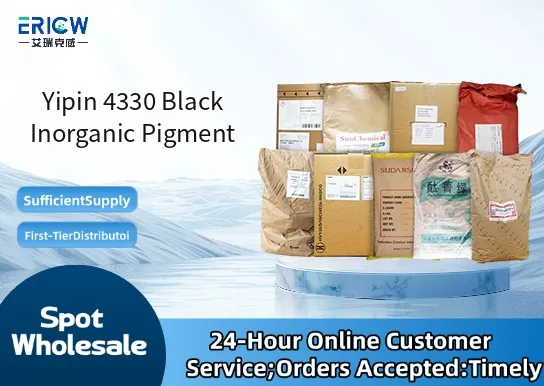
High thermal stability up to 800 °C, suitable for high-temperature processing environments.
Excellent UV resistance and lightfastness, ensuring long-term color retention in outdoor applications.
Non-toxic and heavy-metal-free formulation, compliant with RoHS and REACH regulations.
Superior dispersion performance in aqueous and solvent-based systems without requiring additional dispersants.
Consistent particle size distribution for uniform tinting strength and minimal batch-to-batch variation.
Ceramic glazes and underglaze decorations for tableware and architectural tiles.
High-performance engineering plastics including polyamide (PA), polypropylene (PP), and PBT.
Architectural coatings and exterior wall paints requiring weather resistance and alkali stability.
Automotive refinish and OEM coatings where heat resistance and color consistency are critical.
Specialty inks for industrial coding, ceramic labeling, and glass marking.
| Chemical Type | Mixed Metal Oxide (Fe–Mn–Cr spinel structure) |
| Product Form | Fine dry powder |
| Appearance | Jet-black free-flowing powder |
| Primary Applications | Ceramics, plastics, coatings, inks |
| Key Features | Heat resistant, chemically inert, non-volatile |
| Benefits | Low oil absorption, high opacity, low abrasivity |
| pH (10% aqueous slurry) | 6.5–7.5 |
| Volatile Content (105 °C, 2 hrs) | ≤0.5 wt% |
Q1: What is the primary chemical composition of Yipin 4330?
A: Yipin 4330 is a high-performance black inorganic pigment based on a complex metal oxide system, engineered for thermal and chemical stability. It does not contain heavy metals such as lead, cadmium, or mercury, and is formulated to meet global regulatory expectations for industrial pigments.
Q2: Is Yipin 4330 suitable for use in polyolefin compounds?
A: Yes, Yipin 4330 demonstrates excellent compatibility and dispersion stability in polyolefin matrices—including PP and HDPE—under standard compounding conditions. Its thermal stability supports processing temperatures up to 300 °C without significant degradation or color shift.
Q3: How does Yipin 4330 perform under UV exposure?
A: As an inorganic pigment, Yipin 4330 offers inherently high UV resistance and lightfastness. It maintains consistent black intensity and minimal fading in outdoor applications when properly compounded and stabilized within the host polymer system.
Q4: What is the typical dosage range for achieving optimal blackness in thermoplastics?
A: Dosage depends on formulation requirements and desired opacity, but Yipin 4330 is typically used at low concentrations—generally ranging from 0.1% to 2% by weight—to deliver deep, uniform black tones with good tinting strength and minimal impact on mechanical properties.
Q5: Can Yipin 4330 be used in food-contact-approved plastic applications?
A: While Yipin 4330 itself is free of restricted heavy metals and designed for technical performance, final compliance with food-contact regulations depends on the full formulation, processing conditions, and end-use application. Customers must conduct appropriate migration testing and verify regulatory alignment with their target markets.
Contact With Us:
E-mail: wangxingqiang@ericwchem.com
Have a Questions? Call Us:
Add:
Building A1, Jiete Industrial Park, Huangpu District, Guangzhou City, Guangdong Province, China