English
 Español
 tiếng việt
 русский
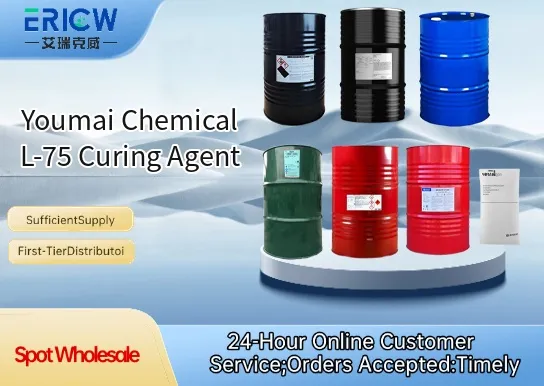
Fast-reacting aliphatic amine-based curing agent for room-temperature and elevated-temperature epoxy systems.
Low viscosity enables excellent mixing efficiency and improved wetting of fillers and reinforcements.
Low volatility and reduced amine odor, enhancing workplace safety and operator comfort.
Delivers high crosslink density, resulting in superior mechanical strength and chemical resistance in cured epoxy networks.
Compatible with standard DGEBA and modified epoxy resins without requiring pre-drying or special handling.
Structural adhesives for automotive and aerospace assembly.
High-performance coating systems for industrial steel and concrete protection.
Electrical encapsulation and potting compounds for power electronics and transformers.
Fiber-reinforced polymer (FRP) composites in wind turbine blade manufacturing.
Repair mortars and grouts for infrastructure rehabilitation projects.
| Chemical Type | Aliphatic polyamine adduct |
| Product Form | Liquid |
| Appearance | Pale yellow to amber clear liquid |
| Viscosity (25°C) | 200–400 mPa·s |
| Density (25°C) | 0.92–0.96 g/cm³ |
| Amine Value | 380–420 mg KOH/g |
| Reactivity Profile | Medium-fast cure at 20–25°C; full cure achievable within 24–48 h |
| Primary Applications | Epoxy adhesives, coatings, composites, and encapsulants |
Q1: What types of resins is L-75 compatible with?
A: L-75 is specifically designed for use with epoxy resins, including both liquid and solid bisphenol-A and bisphenol-F based systems. It demonstrates good compatibility with modified epoxies such as cycloaliphatic and novolac epoxies, though performance should be verified in the final formulation.
Q2: How does L-75 affect pot life and cure speed compared to conventional amine curing agents?
A: L-75 offers an extended working time at ambient temperatures while enabling efficient thermal cure at elevated temperatures (typically 120–150 °C). Its reactivity profile supports a balanced compromise between handling safety and throughput efficiency—longer than fast-reacting aliphatic amines, but shorter than many latent phenolic or dicyandiamide systems.
Q3: Is L-75 suitable for applications requiring low volatility and minimal odor?
A: Yes. L-75 is a non-volatile, low-odor solid curing agent, making it well-suited for indoor applications and formulations where worker exposure and VOC emissions are key considerations. It does not require special ventilation beyond standard industrial hygiene practices.
Q4: What is the typical dosage range for L-75 in epoxy formulations?
A: Dosage depends on the specific epoxy resin type, desired mechanical properties, and processing conditions. L-75 is generally used at low concentrations—typically ranging from 0.1% to 2% by weight relative to the epoxy resin—and requires optimization through small-scale trials.
Q5: Does L-75 contribute to improved thermal or chemical resistance in cured epoxy networks?
A: Yes. When fully cured, L-75 helps generate highly crosslinked epoxy networks that exhibit enhanced heat resistance and improved resistance to common solvents and alkaline environments—particularly when post-cured. Performance gains are formulation-dependent and should be validated under end-use conditions.
Contact With Us:
E-mail: wangxingqiang@ericwchem.com
Have a Questions? Call Us:
Add:
Building A1, Jiete Industrial Park, Huangpu District, Guangzhou City, Guangdong Province, China