English
 Español
 tiếng việt
 русский
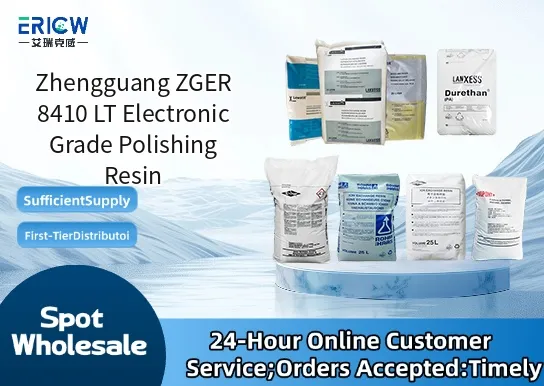
Ultra-low metallic impurity content (<1 ppb Na, K, Ca, Mg, Fe, Ni, Cu, Zn) for semiconductor-grade water polishing.
Highly uniform spherical bead morphology with narrow particle size distribution (600–800 μm) ensuring consistent hydraulic performance.
Optimized functional group density and crosslinking (8% DVB) for enhanced selectivity toward trace cations and improved regeneration efficiency.
Low TOC leaching (<0.5 ppb) under standard operating conditions, meeting stringent ultrapure water (UPW) specifications for advanced node fabrication.
Excellent physical and chemical stability across pH 1–14, enabling compatibility with aggressive regenerants and extended service life.
Final polishing stage in ultrapure water (UPW) systems for semiconductor wafer fabrication facilities (fabs).
Polishing loop in 300 mm and 450 mm wafer process water recirculation systems.
Cation removal in high-purity rinse water circuits for photolithography and etch tools.
Trace metal scavenging in CMP (chemical mechanical planarization) slurry makeup water systems.
Polishing resin in pharmaceutical-grade water (PW/HPW) systems requiring electronic-grade purity assurance.
| Chemical Type | Strong Acid Cation (SAC), sulfonated polystyrene-divinylbenzene |
| Product Form | Moist, gel-type spherical beads |
| Appearance | Amber, translucent, uniform spherical particles |
| Particle Size Range | 600–800 μm (95% of total) |
| Uniformity Coefficient | ≤1.3 |
| Crosslinking Degree | 8% divinylbenzene (DVB) |
| Ion Exchange Capacity (dry basis) | ≥4.8 eq/L (H⁺ form) |
| Maximum Operating Temperature | 120 °C |
Q1: What distinguishes ZGER 8410 LT from standard polishing resins used in electronics manufacturing?
A: ZGER 8410 LT is specifically engineered for ultra-low ionic leaching and minimal particulate generation, making it suitable for high-purity applications such as post-CMP slurry conditioning and final rinse enhancement in advanced semiconductor wafer cleaning processes. Its low-temperature activation profile supports energy-efficient integration into sensitive thermal processes.
Q2: Is ZGER 8410 LT compatible with deionized water-based cleaning systems commonly used in front-end semiconductor fabrication?
A: Yes — ZGER 8410 LT is fully compatible with DI water systems and demonstrates stable dispersion and consistent ion exchange performance under typical ultrapure water conditions (resistivity ≥18.2 MΩ·cm). It does not introduce detectable metallic contaminants or organic extractables that would compromise particle-free surface requirements.
Q3: How should ZGER 8410 LT be handled and stored to maintain its electronic-grade performance?
A: Store in original sealed packaging at ambient temperature, away from direct sunlight and sources of moisture or volatile organics. Once opened, minimize exposure to ambient air and use within 6 months under controlled cleanroom conditions. Avoid contact with non-certified plastics or metals that may leach ions.
Q4: Can ZGER 8410 LT be regenerated after use in polishing or purification loops?
A: Regeneration is technically feasible using standard acid-base protocols, but for electronic-grade applications, single-use operation is strongly recommended to ensure consistent purity control and eliminate risk of cross-contamination or residual regenerant carryover.
Contact With Us:
E-mail: wangxingqiang@ericwchem.com
Have a Questions? Call Us:
Add:
Building A1, Jiete Industrial Park, Huangpu District, Guangzhou City, Guangdong Province, China