English
 Español
 tiếng việt
 русский
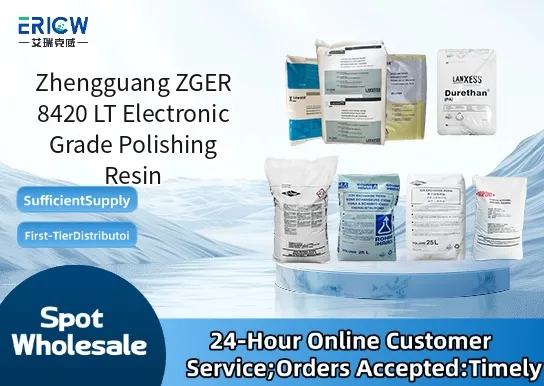
Ultra-low metallic impurity content (<1 ppb Na, K, Ca, Mg, Fe, Ni, Cu, Zn), meeting stringent SEMI F57 and ASTM D5127 standards for electronic-grade water polishing.
Highly uniform spherical morphology with narrow particle size distribution (600–800 μm), ensuring consistent hydraulic performance and minimal pressure drop in polishing beds.
Optimized functional group density and crosslinking (8% DVB) for superior removal of trace anions (e.g., Cl⁻, SO₄²⁻, NO₃⁻) and silica at sub-ppb levels.
Low total organic carbon (TOC) leachables (<0.5 ppb after full regeneration), minimizing risk of organic contamination in ultrapure water (UPW) systems.
Enhanced chemical stability in aggressive regenerants (e.g., 4–6% NaOH, 4–5% HCl), supporting >1,000 operational cycles without significant capacity loss.
Final polishing stage in ultrapure water (UPW) systems for semiconductor fabrication facilities (fabs).
Polishing loop in photovoltaic (PV) cell manufacturing water treatment lines.
Critical polishing resin in LCD/OLED display panel production UPW networks.
Trace ion removal in high-purity process water for advanced packaging and 3D NAND wafer cleaning.
Guard bed polishing in pharmaceutical-grade water (PW/HPW) systems requiring electronic-grade purity assurance.
| Chemical Type | Strong Base Anion Exchange Resin (Type I, Quaternary Ammonium) |
| Product Form | Moist, spherical beads (supplied in 4% NaOH solution) |
| Appearance | Off-white to light amber, translucent spherical beads |
| Functional Group | Triethylbenzylammonium |
| Crosslinking Degree | 8% divinylbenzene (DVB) |
| Particle Size Range | 600–800 μm (95% retained on 20-mesh sieve) |
| Moisture Content | 45–50% (as shipped) |
| Maximum Operating Temperature | 60 °C |
Q1: What distinguishes ZGER 8420 LT from standard polishing resins?
A: ZGER 8420 LT is specifically engineered for electronic-grade applications, featuring ultra-low ionic impurity content, tightly controlled particle size distribution, and enhanced thermal stability to minimize residue generation during high-precision CMP and post-CMP cleaning processes.
Q2: Is ZGER 8420 LT compatible with common semiconductor cleaning chemistries?
A: Yes — it demonstrates stable performance in neutral-to-mildly alkaline aqueous systems and is formulated to resist degradation when used alongside conventional surfactants, chelating agents, and low-concentration oxidizers commonly found in electronic-grade slurries and rinses.
Q3: How should ZGER 8420 LT be handled and stored to maintain its electronic-grade integrity?
A: Store in original sealed packaging under cool, dry conditions away from direct sunlight and strong oxidizing agents. Once opened, minimize exposure to ambient humidity and airborne particulates; use within recommended shelf life and reseal containers promptly after dispensing.
Q4: Can ZGER 8420 LT be used in both batch and inline polishing systems?
A: Yes — its consistent rheological behavior and low sedimentation tendency support reliable dispersion and delivery in both static bath and continuous-flow polishing configurations, making it suitable for integration into various wafer-level and substrate-level manufacturing platforms.
Contact With Us:
E-mail: wangxingqiang@ericwchem.com
Have a Questions? Call Us:
Add:
Building A1, Jiete Industrial Park, Huangpu District, Guangzhou City, Guangdong Province, China