English
 Español
 tiếng việt
 русский
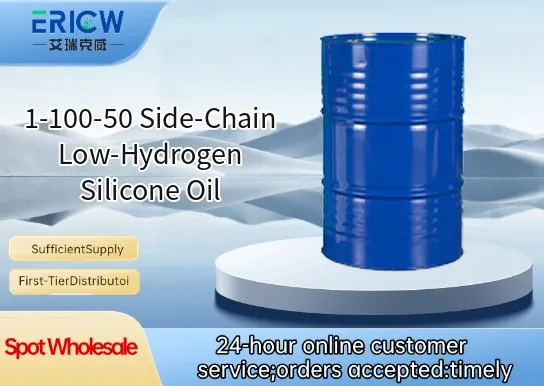
Side-chain functional architecture enables superior compatibility with organic resins and polymers.
Low hydrogen content minimizes risk of catalytic poisoning in platinum-cured silicone systems.
Excellent thermal stability up to 200 °C, supporting high-temperature processing environments.
Low volatility and negligible extractables ensure long-term performance in sealed or precision applications.
Tailored rheology for easy incorporation into coatings, adhesives, and release formulations without phase separation.
Release agent additive for high-performance silicone rubber molds and composite tooling.
Surface modifier in heat-resistant coatings for aerospace and automotive components.
Compatibilizer in silicone-modified epoxy and polyurethane systems.
Processing aid in high-purity silicone elastomer compounding for medical devices.
Hydrophobicity enhancer in specialty textile finishes requiring durable water repellency.
| Chemical Type | Side-chain substituted polydimethylsiloxane (PDMS) with low Si–H functionality |
| Product Form | Clear, colorless to pale yellow liquid |
| Appearance | Homogeneous, free from visible particles or haze |
| Viscosity (25 °C, cSt) | 45–55 |
| Density (25 °C, g/cm³) | 0.97–0.99 |
| Refractive Index (25 °C) | 1.400–1.405 |
| Flash Point (PMCC, °C) | ≥300 |
| Storage Stability | Stable for ≥24 months in sealed container at room temperature |
Q1: What distinguishes this side-chain low-hydrogen silicone oil from conventional linear or high-hydrogen silicones?
A: The 1-100-50 variant features a controlled side-chain architecture with reduced reactive Si–H functionality, which enhances thermal and oxidative stability while minimizing unwanted hydrosilylation side reactions during processing—especially beneficial in heat-sensitive polymer systems and high-temperature curing applications.
Q2: In which types of formulations is this silicone oil most commonly used as an additive?
A: It is widely employed as a surface modifier and release enhancer in silicone rubber compounds, RTV and HTV elastomers, and specialty coatings—particularly where low surface energy, improved mold release, and compatibility with platinum-catalyzed systems are required.
Q3: How does the low-hydrogen content affect compatibility with platinum catalysts?
A: The deliberately reduced Si–H concentration significantly lowers the risk of catalyst poisoning or premature crosslinking inhibition, making it suitable for use in addition-cure (platinum-catalyzed) silicone systems without requiring extensive process adjustments.
Q4: Is this product suitable for applications requiring FDA-compliant or food-contact-safe formulations?
A: While the base chemistry is inherently inert and non-volatile, formal regulatory compliance depends on the final formulation, processing conditions, and applicable jurisdictional requirements. Customers intending food-contact use must conduct full regulatory assessment and validation per their specific application.
Contact With Us:
E-mail: wangxingqiang@ericwchem.com
Have a Questions? Call Us:
Add:
Building A1, Jiete Industrial Park, Huangpu District, Guangzhou City, Guangdong Province, China