English
 Español
 tiếng việt
 русский
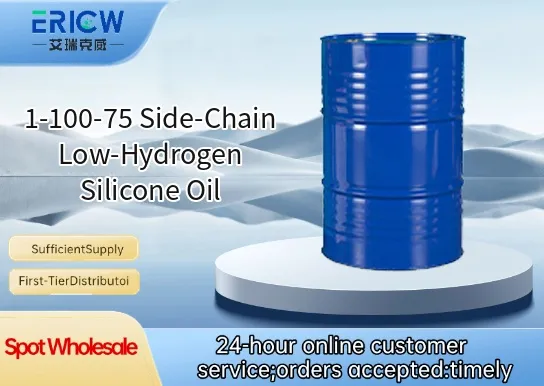
Exceptionally low residual hydrogen content ensures superior thermal and oxidative stability.
Side-chain molecular architecture delivers outstanding lubricity and surface slip without migration.
High compatibility with organic polymers, silicones, and common industrial solvents.
Low volatility and negligible extractables make it ideal for high-purity and regulated applications.
Excellent hydrophobicity and moisture barrier performance in protective coatings and release systems.
High-performance mold release agents for thermoset composites and rubber vulcanization.
Surface modifier in specialty coatings for automotive and aerospace substrates.
Lubricating additive in precision plastic gear formulations and polymer processing aids.
Key ingredient in medical device lubricants requiring USP Class VI compliance support.
Hydrophobic treatment agent for silica-based fillers and functionalized nanomaterials.
| Chemical Type | Side-chain substituted polydimethylsiloxane (low-H) |
| Product Form | Clear, colorless to pale yellow liquid |
| Appearance | Homogeneous, low-viscosity oil |
| Primary Applications | Mold release, surface modification, polymer lubrication, hydrophobic treatment |
| Key Features | Low hydrogen content, side-chain functionality, high thermal stability, non-migrating |
| Benefits | Extended service life, reduced surface defects, improved demolding efficiency, enhanced substrate adhesion control |
| Storage Conditions | Store in sealed containers at 5–30°C; protect from moisture and direct sunlight |
Q1: What distinguishes this side-chain low-hydrogen silicone oil from conventional linear or high-hydrogen silicone fluids?
A: Its side-chain architecture provides enhanced surface activity and compatibility with organic polymers, while the reduced hydrogen content minimizes potential for catalytic side reactions—especially beneficial in heat-sensitive or platinum-cured systems.
Q2: In which types of formulations is this silicone oil most commonly used as a processing aid or surface modifier?
A: It is frequently employed in high-performance coatings, release agents for composite molding, and specialty adhesives where controlled surface migration, improved slip, and reduced coefficient of friction are required without compromising substrate adhesion.
Q3: Is this product compatible with platinum-based catalysts used in addition-cure silicone systems?
A: Yes—its low hydrogen content significantly reduces the risk of catalyst poisoning or premature crosslinking inhibition, making it suitable for incorporation into addition-cure formulations when carefully balanced with other components.
Q4: How should this silicone oil be incorporated into a formulation to ensure uniform dispersion and avoid surface defects?
A: It is recommended to add during the late-stage mixing phase under moderate shear, typically at temperatures below 80 °C. Pre-dilution in a compatible carrier solvent or base resin often improves homogeneity and prevents localized bloom or haze.
Contact With Us:
E-mail: wangxingqiang@ericwchem.com
Have a Questions? Call Us:
Add:
Building A1, Jiete Industrial Park, Huangpu District, Guangzhou City, Guangdong Province, China