English
 Español
 tiếng việt
 русский
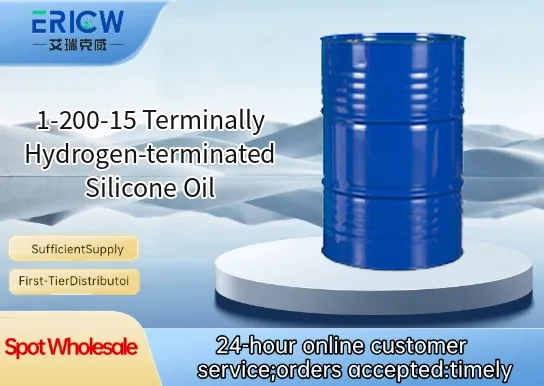
Highly reactive Si–H end groups enable efficient hydrosilylation with alkenes, alkynes, and functional silanes.
Low viscosity (15–25 cSt at 25 °C) ensures excellent processability and uniform dispersion in formulations.
Excellent thermal stability up to 200 °C under inert atmosphere, supporting high-temperature curing processes.
Hydrogen termination provides superior compatibility with silicone elastomers, resins, and crosslinkers.
Low volatility and negligible extractables meet stringent requirements for medical device and electronics encapsulation.
Crosslinking agent in platinum-catalyzed addition-cure liquid silicone rubber (LSR) systems.
Functional modifier for silicone pressure-sensitive adhesives (PSAs) to enhance cohesion and heat resistance.
Surface treatment agent for silica fillers and inorganic pigments in high-performance composites.
Intermediate in synthesis of silicone surfactants, dendrimers, and hybrid organic–inorganic polymers.
Release additive in mold coatings for precision casting and optical lens manufacturing.
| Chemical Type | Linear polydimethylsiloxane with terminal ≡Si–H groups |
| Product Form | Clear, colorless liquid |
| Appearance | Transparent, odorless, non-yellowing |
| Viscosity (25 °C) | 15–25 cSt |
| Reactive Hydrogen Content | 0.8–1.2 wt% (by ASTM D5769) |
| Density (25 °C) | 0.96–0.98 g/cm³ |
| Flash Point (COC) | >180 °C |
| Storage Stability | Stable ≥12 months at 5–30 °C in sealed, dry, nitrogen-purged containers |
Q1: What is the primary functional role of 1-200-15 in silicone-based formulations?
A: 1-200-15 serves as a reactive silicone modifier, enabling covalent incorporation into polysiloxane networks via hydrosilylation. Its terminal Si–H groups allow controlled crosslinking or chain extension with vinyl-functional siloxanes, enhancing thermal stability, release performance, or surface modulation without introducing volatile by-products.
Q2: How does 1-200-15 differ from non-reactive dimethyl silicone oils?
A: Unlike inert linear PDMS oils, 1-200-15 contains reactive hydrogen atoms at both molecular termini. This enables permanent integration into cured silicone matrices rather than acting as a migratory additive—resulting in improved compatibility, reduced blooming, and long-term property retention under thermal or mechanical stress.
Q3: Is 1-200-15 suitable for use in platinum-catalyzed addition-cure systems?
A: Yes, it is fully compatible with platinum-based catalysts and commonly employed in addition-cure RTV, LSR, and HTV silicone formulations. As a difunctional hydride, it contributes to network formation while maintaining predictable reactivity kinetics when balanced against vinyl content.
Q4: What handling precautions should be observed during storage and processing?
A: Store under dry, inert atmosphere (e.g., nitrogen) to prevent moisture-induced condensation or oxidation. Avoid prolonged exposure to elevated temperatures prior to use, and ensure equipment is free of residual amines or tin catalysts that may interfere with hydrosilylation efficiency.
Contact With Us:
E-mail: wangxingqiang@ericwchem.com
Have a Questions? Call Us:
Add:
Building A1, Jiete Industrial Park, Huangpu District, Guangzhou City, Guangdong Province, China