English
 Español
 tiếng việt
 русский
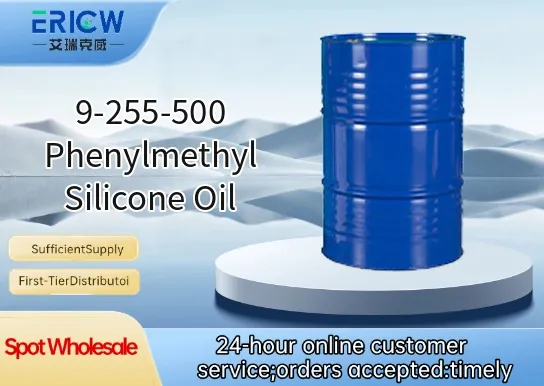
Excellent thermal stability up to 250 °C, maintaining viscosity integrity under prolonged high-temperature exposure.
Superior oxidative resistance compared to standard methyl silicone oils, minimizing degradation in demanding environments.
Low volatility and high flash point (≥300 °C), enhancing process safety and reducing evaporation loss during handling.
Good compatibility with organic polymers, resins, and fillers—ideal for formulating high-performance composites and coatings.
Hydrophobic yet non-yellowing, providing long-term clarity and surface protection in optical and electronic applications.
High-temperature heat transfer fluids in industrial circulation systems and thermal management units.
Base fluid in specialty lubricants for precision instruments, vacuum pumps, and aerospace mechanisms.
Viscosity modifier and release agent in silicone rubber and RTV/HTV compound processing.
Dielectric fluid in high-voltage transformers and capacitors requiring stable insulation performance.
Carrier medium for functional additives in LED encapsulants and optical adhesives.
| Chemical Type | Phenylmethyl polysiloxane |
| Product Form | Clear, colorless to pale yellow liquid |
| Appearance | Homogeneous, transparent, free from visible particles or haze |
| Viscosity (25 °C, cSt) | 500 ± 10% |
| Density (25 °C, g/cm³) | 0.98–1.02 |
| Flash Point (COC, °C) | ≥300 |
| Refractive Index (25 °C) | 1.495–1.505 |
| Volatility (150 °C, 2 hrs, wt%) | ≤1.5 |
Q1: What distinguishes 9-255-500 from standard dimethyl silicone oils?
A: 9-255-500 features phenyl groups substituted onto the silicone backbone, which significantly enhances thermal stability, UV resistance, and compatibility with aromatic solvents and high-performance polymers—unlike conventional dimethyl-based fluids.
Q2: Is this product suitable for use in high-temperature industrial lubricants or heat-transfer fluids?
A: Yes—it is commonly selected for demanding thermal management applications due to its elevated decomposition onset temperature and low volatility, though final suitability depends on system design, operating duration, and exposure to oxidizing environments.
Q3: Can 9-255-500 be blended with organic resins or acrylic modifiers in coating formulations?
A: Yes—it demonstrates good miscibility with many thermosetting resins and is frequently used as a surface modifier to improve mar resistance and substrate wetting, typically at low concentrations without compromising film integrity.
Q4: How does viscosity behavior change with temperature compared to other phenyl-containing silicones?
A: 9-255-500 exhibits relatively low viscosity-temperature sensitivity (high viscosity index), offering more consistent rheological performance across wide thermal ranges—particularly advantageous in precision instrumentation damping and optical coupling applications.
Contact With Us:
E-mail: wangxingqiang@ericwchem.com
Have a Questions? Call Us:
Add:
Building A1, Jiete Industrial Park, Huangpu District, Guangzhou City, Guangdong Province, China