English
 Español
 tiếng việt
 русский
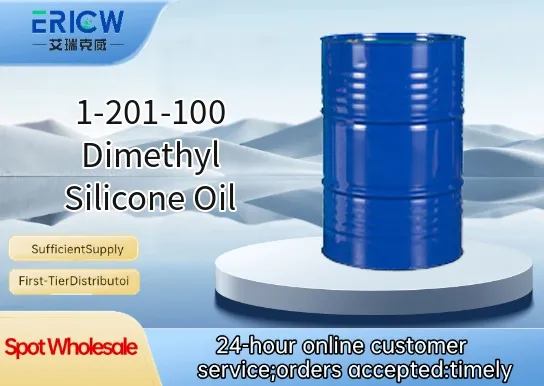
High thermal stability with consistent viscosity across a wide temperature range (−40 °C to +200 °C).
Excellent water repellency and low surface tension for superior spreading and wetting performance.
Chemically inert and non-reactive with most acids, bases, and solvents under standard processing conditions.
Odorless, colorless, and non-volatile — meets strict requirements for cosmetic and pharmaceutical-grade formulations.
Low volatility and negligible vapor pressure, ensuring long-term stability in sealed and open systems.
Personal care formulations including hair conditioners, skin moisturizers, and makeup primers.
Industrial lubricants for precision instruments, plastic gears, and rubber-to-metal interfaces.
Release agents in silicone mold making, polyurethane foaming, and composite manufacturing.
Dielectric fluid in high-voltage transformers and electronic potting compounds.
Defoaming and antifoaming carrier in water-based paints, adhesives, and industrial cleaning agents.
| Chemical Type | Linear polydimethylsiloxane (PDMS) |
| Product Form | Clear, mobile liquid |
| Appearance | Colorless, transparent, and homogeneous |
| Viscosity (25 °C, cSt) | 100 ± 10 |
| Density (25 °C, g/cm³) | 0.96–0.97 |
| Refractive Index (25 °C) | 1.400–1.403 |
| Flash Point (COC, °C) | ≥ 300 |
| Volatility (24 h @ 200 °C, wt%) | ≤ 0.5 |
Q1: What is the typical viscosity range of 1-201-100 Dimethyl Silicone Oil?
A: 1-201-100 is a medium-viscosity dimethyl silicone oil, commonly used in applications requiring balanced flow characteristics and surface activity. Its viscosity generally ranges from 100 to 300 cSt at 25 °C, making it suitable for both blending and direct functional use.
Q2: Is this silicone oil compatible with common industrial solvents and polymer systems?
A: Yes — 1-201-100 exhibits broad compatibility with hydrocarbon solvents, alcohols, esters, and many thermoplastic and thermoset resins. It is frequently incorporated into coatings, adhesives, and sealants without phase separation, though compatibility testing under end-use conditions is recommended.
Q3: How does 1-201-100 contribute to surface modification in formulations?
A: Due to its low surface tension and high molecular mobility, 1-201-100 migrates readily to interfaces, improving slip, leveling, and anti-blocking performance. It is often used at low concentrations to enhance substrate wetting and reduce friction without significantly affecting bulk mechanical properties.
Q4: Can 1-201-100 be used in food-contact or pharmaceutical-adjacent applications?
A: While 1-201-100 is based on USP/EP-grade dimethyl silicone chemistry, its suitability for regulated applications depends on final formulation, processing, and compliance verification by the end user. It is not pre-certified for direct food contact or pharmaceutical use unless specifically manufactured and tested to meet those requirements.
Contact With Us:
E-mail: wangxingqiang@ericwchem.com
Have a Questions? Call Us:
Add:
Building A1, Jiete Industrial Park, Huangpu District, Guangzhou City, Guangdong Province, China