English
 Español
 tiếng việt
 русский
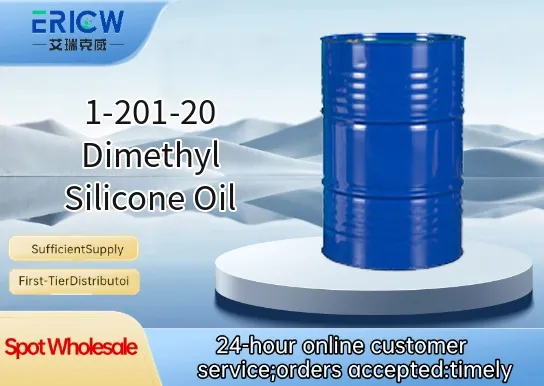
Exceptionally low volatility and high thermal stability for long-term performance in elevated temperature environments.
Outstanding water repellency and moisture barrier properties for protective surface treatments.
Excellent dielectric strength and electrical insulation characteristics suitable for electronic encapsulation and coating applications.
Low surface tension and superior spreading behavior, enabling uniform film formation on diverse substrates.
Chemically inert and resistant to oxidation, UV radiation, and common solvents under normal operating conditions.
Release agent for rubber, plastic, and composite molding processes.
Base fluid in silicone lubricants and greases for precision instruments and automotive components.
Surface modifier in coatings, inks, and adhesives to enhance slip, leveling, and anti-blocking performance.
Dielectric fluid in transformers, capacitors, and high-voltage electrical equipment.
Formulation ingredient in personal care products such as hair conditioners and skin protectants for sensory enhancement and conditioning.
| Chemical Type | Linear polydimethylsiloxane (PDMS) |
| Product Form | Clear, colorless liquid |
| Appearance | Transparent, odorless, non-yellowing liquid |
| Viscosity (25°C, cSt) | 20,000 ± 2,000 |
| Density (25°C, g/cm³) | 0.97–0.99 |
| Refractive Index (25°C) | 1.400–1.405 |
| Flash Point (COC, °C) | ≥300 |
| Volatility (200°C, 24h, wt%) | ≤1.5 |
Q1: What is the typical viscosity range for 1-201-20 Dimethyl Silicone Oil?
A: 1-201-20 refers to a medium-viscosity grade of dimethyl silicone oil, commonly used where balanced flow behavior and surface activity are required. Its viscosity generally falls within the range of 100–500 cSt at 25 °C, making it suitable for applications such as mold release agents, textile softeners, and personal care emulsions.
Q2: Is this silicone oil compatible with common organic solvents and polymer systems?
A: Yes, 1-201-20 Dimethyl Silicone Oil exhibits good miscibility with hydrocarbon solvents, alcohols, and many esters. It is also widely compatible with thermoplastic elastomers, silicones, and acrylic-based formulations, though compatibility should always be verified under actual processing conditions due to potential interactions with polar additives or catalysts.
Q3: How does temperature affect its performance in high-heat applications?
A: This grade demonstrates excellent thermal stability and retains lubricity and film integrity up to approximately 200 °C for short-term exposure. Prolonged use above 150 °C may lead to gradual oxidative thinning, so application-specific aging studies are recommended for continuous high-temperature service.
Q4: Can it be used in cosmetics or personal care formulations?
A: Yes — 1-201-20 Dimethyl Silicone Oil is frequently employed in leave-on and rinse-off cosmetic products for its skin-feel enhancement, spreadability, and water resistance. It is typically used at low concentrations and is compatible with most emulsifier systems, though final formulation safety and regulatory compliance must be confirmed by the formulator.
Contact With Us:
E-mail: wangxingqiang@ericwchem.com
Have a Questions? Call Us:
Add:
Building A1, Jiete Industrial Park, Huangpu District, Guangzhou City, Guangdong Province, China