English
 Español
 tiếng việt
 русский
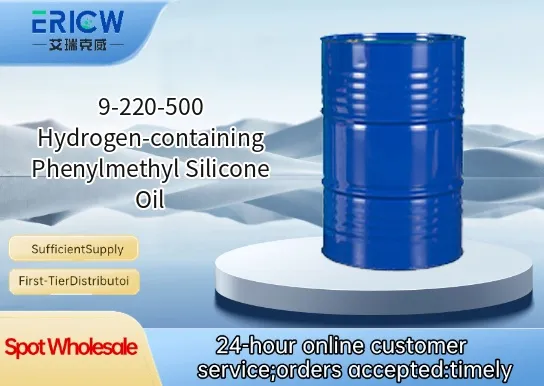
High hydrogen content enables efficient hydrosilylation reactions with alkenes and alkynes.
Phenylmethyl backbone provides enhanced thermal stability and oxidative resistance versus pure methyl silicone oils.
Low volatility and excellent hydrophobicity support long-term performance in high-temperature processing environments.
Controlled viscosity (approx. 500 cSt at 25°C) ensures optimal handling, dispersion, and compatibility with common silicone systems.
Free of solvents and reactive diluents — suitable for high-purity crosslinking applications in electronics and medical-grade silicones.
Crosslinker in addition-cure liquid silicone rubber (LSR) formulations for automotive and medical components.
Hydrosilylation catalyst carrier in platinum-catalyzed silicone gels and encapsulants.
Functional modifier for heat-resistant coatings and release agents in composite molding.
Base fluid in specialty silicone adhesives requiring thermal resilience and low surface energy.
Reactive intermediate in the synthesis of branched or graft silicone polymers with tailored phenyl/methyl ratios.
| Chemical Type | Hydrogen-containing phenylmethyl polysiloxane |
| Product Form | Clear, colorless to pale yellow liquid |
| Appearance | Homogeneous, free from visible particles or haze |
| Viscosity (25°C) | 480–520 cSt (ASTM D2196) |
| Reactive Hydrogen Content | 0.45–0.55 wt% (by titration) |
| Density (25°C) | 1.03–1.06 g/cm³ (ASTM D1475) |
| Flash Point (COC) | ≥300°C (ASTM D92) |
| Storage Stability | Stable ≥12 months at <30°C in sealed, dry, nitrogen-blanketed containers |
Q1: What is the primary functional role of this hydrogen-containing phenylmethyl silicone oil in formulations?
A: It serves primarily as a reactive crosslinking agent or hydrosilylation modifier in silicone elastomers, coatings, and release systems—leveraging its Si–H groups to participate in platinum-catalyzed addition reactions with vinyl-functional siloxanes.
Q2: How does the phenylmethyl substitution influence performance compared to purely methyl-based hydrogen silicones?
A: The phenyl groups enhance thermal stability, oxidative resistance, and compatibility with aromatic resins or high-refractive-index matrices—making it particularly suitable for high-temperature curing applications and optical-grade silicone formulations.
Q3: Is this product compatible with platinum catalysts used in addition-cure systems?
A: Yes—it is specifically designed for use with standard Karstedt-type or similar platinum complexes in addition-cure silicone systems, provided inhibitors and processing conditions are appropriately controlled to avoid premature gelation.
Q4: What handling precautions should be observed during storage and processing?
A: Store under dry, inert atmosphere (e.g., nitrogen) at cool, stable temperatures; minimize exposure to moisture, strong bases, and heavy metal contaminants, as these may promote undesired condensation or catalyst poisoning.
Contact With Us:
E-mail: wangxingqiang@ericwchem.com
Have a Questions? Call Us:
Add:
Building A1, Jiete Industrial Park, Huangpu District, Guangzhou City, Guangdong Province, China