English
 Español
 tiếng việt
 русский
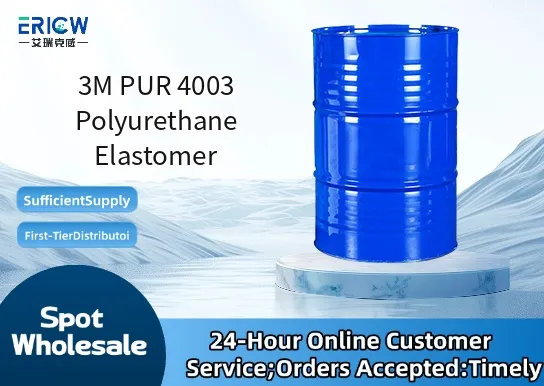
Excellent abrasion resistance for extended service life in high-wear environments.
High tensile strength and elongation at break, enabling robust mechanical performance under dynamic loading.
Good resistance to oils, greases, and many industrial solvents.
Low-temperature flexibility down to –30 °C without significant loss of elasticity.
Easy processing via casting, centrifugal casting, or injection molding with standard polyurethane equipment.
Industrial rollers and idler wheels for material handling and conveyor systems.
Mining and quarrying equipment components including screen panels and chute liners.
Heavy-duty wheels and casters for automated guided vehicles (AGVs) and material transport carts.
Seals, gaskets, and custom-molded parts requiring resilience and chemical durability.
Wear pads and impact-absorbing bumpers in automotive and off-highway machinery.
| Chemical Type | Aromatic polyester-based thermoset polyurethane elastomer |
| Product Form | Two-component liquid system (A-side: isocyanate; B-side: polyol/hardener blend) |
| Appearance | A-side: amber liquid; B-side: pale yellow to light brown viscous liquid |
| Primary Applications | Casting, centrifugal casting, and low-pressure molding of high-performance elastomeric parts |
| Key Features | High hardness (Shore A 95–98), superior tear strength, and low compression set |
| Benefits | Reduced downtime due to extended wear life and simplified repair/replacement of critical components |
| Curing Temperature Range | Room temperature cure (23 °C) or accelerated cure at 60–80 °C |
| Storage Stability | 12 months unopened at 15–25 °C; protect from moisture and direct sunlight |
Q1: What is the primary function of 3M PUR 4003 in polyurethane formulations?
A: 3M PUR 4003 is a reactive polyurethane elastomer modifier designed to enhance toughness, abrasion resistance, and dynamic mechanical performance in castable or reaction-injection molded (RIM) PU systems. It functions as a chain extender and microphase-segregating soft segment contributor, improving elastomeric behavior without compromising processability.
Q2: Is 3M PUR 4003 compatible with both aromatic and aliphatic isocyanate systems?
A: Yes, 3M PUR 4003 demonstrates broad compatibility with common aromatic (e.g., MDI- and TDI-based) and aliphatic (e.g., HDI- and IPDI-based) polyisocyanates. Its reactivity profile allows integration into both thermoset and thermoplastic PU systems, though optimal performance is typically achieved when matched with medium-to-slow-reacting isocyanates for balanced gel time and cure development.
Q3: How does 3M PUR 4003 affect processing viscosity and demold time?
A: When incorporated at typical dosage levels, 3M PUR 4003 generally maintains low to moderate viscosity impact—supporting good mold fill and air release. It contributes to accelerated green strength development, often reducing demold time compared to conventional polyol-only systems, while still allowing sufficient working time for complex part geometries.
Q4: Can 3M PUR 4003 be used in food-contact or medical-grade polyurethane applications?
A: 3M PUR 4003 is not pre-certified for direct food-contact or implantable medical use. Its suitability for regulated applications depends on full system formulation, final cure conditions, and end-use validation—including extractables profiling and biocompatibility testing per applicable regulatory pathways. Customers must conduct their own due diligence and obtain appropriate regulatory approvals.
Contact With Us:
E-mail: wangxingqiang@ericwchem.com
Have a Questions? Call Us:
Add:
Building A1, Jiete Industrial Park, Huangpu District, Guangzhou City, Guangdong Province, China