English
 Español
 tiếng việt
 русский
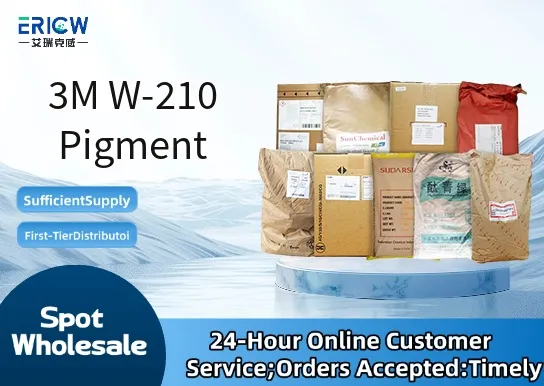
High chromatic strength with excellent color consistency across batches.
Outstanding thermal stability suitable for high-temperature processing up to 280°C.
Good dispersibility in both polar and non-polar polymer matrices.
Low volatility and minimal extractables, meeting stringent regulatory requirements for food-contact-adjacent applications.
UV-resistant formulation providing enhanced lightfastness in outdoor-exposed end products.
Coloration of polypropylene (PP) and polyethylene (PE) packaging films.
Masterbatch production for automotive interior trim components.
Pigmentation of engineering thermoplastics including ABS and polycarbonate.
Colorant for medical-grade polyolefin tubing and containers.
Functional pigment in UV-stabilized agricultural mulch films.
| Chemical Type | Organic pigment dispersion (non-heavy-metal) |
| Product Form | Free-flowing powder |
| Appearance | Uniform fine orange-red powder |
| Primary Applications | Polyolefins, engineering plastics, masterbatches |
| Key Features | Thermally stable, low migration, high tinctorial strength |
| Benefits | Consistent color matching, reduced dosage requirement, broad process compatibility |
| Regulatory Compliance | REACH compliant; meets FDA 21 CFR §178.3297 for indirect food contact |
| Storage Conditions | Store in cool, dry place below 30°C; protect from moisture and direct sunlight |
Q1: What is the primary chemical nature of 3M W-210 Pigment?
A: 3M W-210 Pigment is an inorganic, high-performance pigment based on a modified metal oxide composite system, engineered for thermal and chemical stability in demanding polymer processing environments.
Q2: Is 3M W-210 Pigment suitable for food-contact polymer applications?
A: While 3M W-210 Pigment is not pre-approved for direct food-contact use under global regulatory frameworks, it may be evaluated for specific food-contact applications subject to full formulation assessment, end-use conditions, and compliance verification by the responsible party.
Q3: How does 3M W-210 Pigment perform under high-temperature processing conditions?
A: This pigment exhibits excellent thermal stability and retains its color integrity during standard polymer melt processing, including extrusion and injection molding at temperatures commonly encountered in polyolefin and engineering thermoplastic systems.
Q4: What types of polymer systems is 3M W-210 Pigment typically compatible with?
A: It demonstrates broad compatibility with non-polar and semi-crystalline thermoplastics such as polypropylene (PP), polyethylene (PE), and certain polyesters; dispersion performance may vary in highly polar or reactive resins and should be verified experimentally.
Q5: What is the typical dosage range for achieving optimal color development?
A: Dosage depends on the target shade intensity and base resin, but 3M W-210 Pigment is generally used at low concentrations—typically ranging from 0.1% to 2% by weight—to achieve consistent, uniform coloration without compromising mechanical properties.
Contact With Us:
E-mail: wangxingqiang@ericwchem.com
Have a Questions? Call Us:
Add:
Building A1, Jiete Industrial Park, Huangpu District, Guangzhou City, Guangdong Province, China