English
 Español
 tiếng việt
 русский
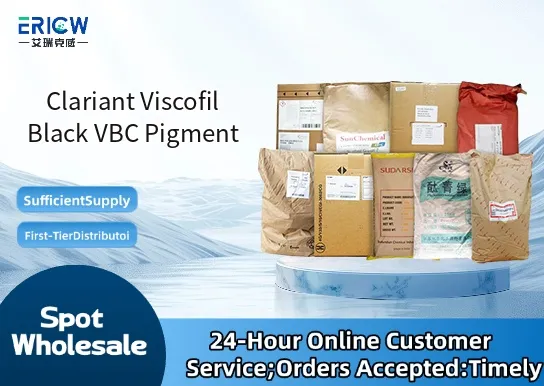
High jetness and excellent black strength for intense, consistent coloration.
Optimized dispersibility in water-based and solvent-based systems without requiring additional grinding.
Good thermal stability suitable for high-temperature processing up to 180 °C.
Low dusting formulation enhancing workplace safety and handling efficiency.
Compliant with major global regulatory frameworks including REACH and RoHS.
Water-based architectural and industrial coatings.
Automotive OEM and refinish basecoat/clearcoat systems.
Plastic color concentrates for polyolefins and engineering thermoplastics.
Inks for packaging gravure and flexographic printing.
High-performance powder coatings for metal finishing.
| Chemical Type | Vinylpyrrolidone-modified carbon black |
| Product Form | Free-flowing granular pigment concentrate |
| Appearance | Jet-black granules, free of visible specks or agglomerates |
| Primary Applications | Coatings, inks, plastics, and powder coatings |
| Key Features | Easy dispersion, low viscosity impact, high tinting strength |
| Benefits | Reduced energy consumption during dispersion, improved batch consistency |
| Storage Stability | Stable for 24 months in original sealed packaging at 5–30 °C |
| Recommended Loading Range | 0.5–3.0 wt% depending on application and substrate |
Q1: What is the primary application of Viscofil Black VBC Pigment?
A: Viscofil Black VBC Pigment is specially formulated for high-performance black coloration in thermoplastic and thermoset polymer systems, particularly where excellent dispersion, thermal stability, and consistent jetness are required—commonly used in engineering plastics, masterbatches, and technical compounds.
Q2: Is Viscofil Black VBC suitable for food-contact or medical-grade applications?
A: Viscofil Black VBC is not pre-qualified for food-contact or medical applications. Its suitability must be evaluated case-by-case based on final formulation, processing conditions, regulatory requirements, and end-use compliance—consult Clariant’s regulatory team and perform appropriate testing before use in regulated segments.
Q3: How does Viscofil Black VBC differ from standard carbon black pigments?
A: Unlike conventional carbon blacks, Viscofil Black VBC is a surface-modified, non-dusting pigment with enhanced dispersibility and reduced viscosity impact in molten polymers. It delivers superior color strength, improved flow behavior, and lower agglomeration tendency—especially beneficial in high-shear compounding and thin-wall injection molding.
Q4: What are the recommended processing conditions for optimal dispersion?
A: For best results, Viscofil Black VBC should be processed using standard melt-compounding equipment (e.g., twin-screw extruders) at typical polymer processing temperatures. Adequate shear input and residence time are essential; pre-mixing with carrier resin or use in masterbatch form is strongly recommended to ensure uniform distribution and avoid dusting.
Q5: Can Viscofil Black VBC be used in polyolefin-based masterbatches?
A: Yes—Viscofil Black VBC is widely used in PP and PE masterbatches due to its excellent compatibility, low plate-out tendency, and stable rheological profile. Dosage typically ranges from 0.1% to 2% by weight depending on desired opacity and blackness level, and it performs well under standard pelletizing conditions.
Contact With Us:
E-mail: wangxingqiang@ericwchem.com
Have a Questions? Call Us:
Add:
Building A1, Jiete Industrial Park, Huangpu District, Guangzhou City, Guangdong Province, China