English
 Español
 tiếng việt
 русский
High chromatic strength with excellent color consistency across batches.
Outstanding thermal stability up to 280°C, suitable for high-temperature processing.
Good dispersibility in both polar and non-polar polymer matrices.
Low heavy metal content, compliant with EU REACH and RoHS directives.
Enhanced lightfastness (ISO 105-B02, Grade 7–8) and weather resistance.
Automotive interior and exterior plastic components (PP, ABS, PC).
Engineering thermoplastics for electronic housings and connectors.
Color concentrates for injection molding and extrusion processes.
High-performance industrial coatings requiring UV and thermal durability.
Food-contact-compliant packaging films (subject to local regulatory approval).
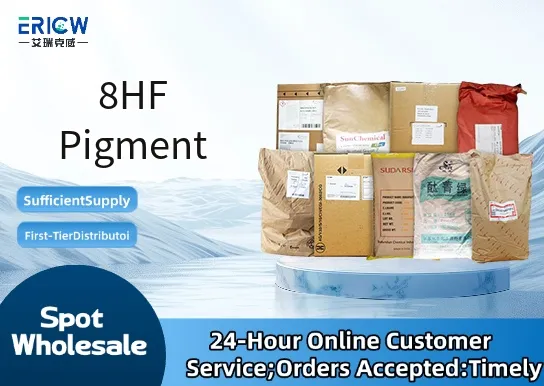
| Chemical Type | High-performance organic pigment (quinacridone derivative) |
| Product Form | Fine free-flowing powder |
| Appearance | Uniform red-violet powder |
| Primary Applications | Plastics, masterbatches, and industrial coatings |
| Key Features | Thermally stable, low migration, high tinctorial strength |
| Benefits | Reduces dosage requirement; improves processability and color yield |
| Storage Conditions | Store in cool, dry place below 30°C; protect from moisture and direct sunlight |
| Regulatory Compliance | REACH registered; non-GMO; halogen-free |
Q1: What is the primary chemical nature of 8HF Pigment?
A: 8HF Pigment is a high-performance organic pigment, specifically engineered for exceptional chromatic strength, thermal stability, and lightfastness in demanding polymer and coating systems.
Q2: Is 8HF Pigment suitable for food-contact plastics?
A: While 8HF Pigment is not inherently prohibited for food-contact applications, its use in such systems requires full regulatory assessment by the formulator—including compliance verification with applicable regional regulations (e.g., FDA 21 CFR, EU Plastics Regulation) and thorough migration testing under intended conditions.
Q3: How does 8HF Pigment perform during high-temperature processing?
A: 8HF Pigment exhibits excellent thermal stability and retains its color integrity during standard melt-processing of engineering thermoplastics, including polyolefins and polyesters processed at temperatures up to approximately 280 °C.
Q4: What dispersion methods are recommended for optimal performance?
A: For best results, pre-dispersion using high-shear mixing or twin-screw extrusion is strongly recommended. Compatibility with common dispersing aids and carrier resins should be confirmed via small-scale trials prior to full-scale integration.
Contact With Us:
E-mail: wangxingqiang@ericwchem.com
Have a Questions? Call Us:
Add:
Building A1, Jiete Industrial Park, Huangpu District, Guangzhou City, Guangdong Province, China