English
 Español
 tiếng việt
 русский
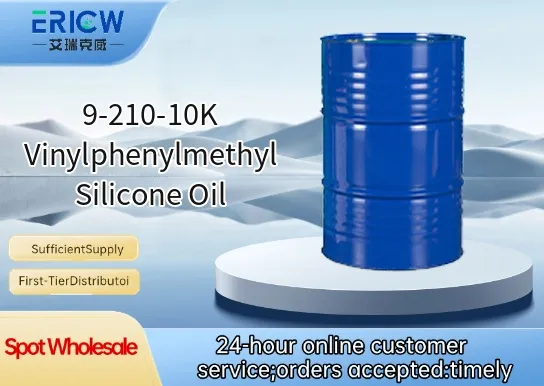
High thermal and oxidative stability due to phenyl and vinyl functional groups.
Excellent compatibility with organic resins, acrylics, and epoxy systems.
Tailored rheology control for improved flow and leveling in high-performance coatings.
Low surface tension enabling superior substrate wetting and defect reduction.
UV-resistant molecular structure suitable for outdoor-cured and light-exposed formulations.
High-solids industrial coatings requiring mar resistance and gloss retention.
UV-curable inks and varnishes for flexible packaging and decorative printing.
Release additives in silicone-modified polyurethane and polyester elastomers.
Surface modifiers for LED encapsulants and optical adhesives.
| Chemical Type | Vinylphenylmethyl silicone fluid |
| Product Form | Clear, colorless to pale yellow liquid |
| Appearance | Homogeneous, low-viscosity oil |
| Primary Applications | Functional additive in coatings, inks, adhesives, and specialty elastomers |
| Key Features | Vinyl reactivity, phenyl-enhanced thermal stability, methyl backbone flexibility |
| Benefits | Improved crosslink density, enhanced film integrity, reduced surface defects |
| Storage Conditions | Store in sealed containers at 5–30°C, protect from moisture and direct sunlight |
Q1: What distinguishes 9-210-10K from standard methyl silicone oils?
A: 9-210-10K features vinyl and phenyl functional groups alongside methyl substituents, offering enhanced thermal stability, improved compatibility with aromatic resins and filled polymers, and greater resistance to compression set compared to linear dimethyl silicone oils.
Q2: Is this silicone oil suitable for use in high-temperature elastomer formulations?
A: Yes — the phenyl and vinyl moieties contribute to superior thermal and oxidative stability, making it well-suited for high-temperature vulcanization systems such as HTV silicone rubber, especially where enhanced mechanical retention after aging is required.
Q3: How does 9-210-10K perform in reactive silicone systems?
A: The terminal vinyl groups enable participation in hydrosilylation reactions, allowing covalent incorporation into crosslinked networks — commonly used as a reactive processing aid or modifier in addition-cure silicone compounds.
Q4: Can it be blended with other organosilicon fluids or organic carriers?
A: It exhibits good miscibility with most common silicone oils (e.g., PDMS, phenylmethyl siloxanes) and many non-polar organic solvents or carriers; however, compatibility with highly polar media (e.g., alcohols, glycols) should be verified experimentally prior to formulation.
Q5: What is the typical dosage range when used as a processing aid in silicone rubber?
A: Dosage depends on formulation requirements and desired effect, but it is typically used at low concentrations — generally ranging from 0.1% to 2% by weight relative to the base polymer — to improve dispersion, reduce viscosity, or modify surface properties without compromising cure kinetics.
Contact With Us:
E-mail: wangxingqiang@ericwchem.com
Have a Questions? Call Us:
Add:
Building A1, Jiete Industrial Park, Huangpu District, Guangzhou City, Guangdong Province, China