English
 Español
 tiếng việt
 русский
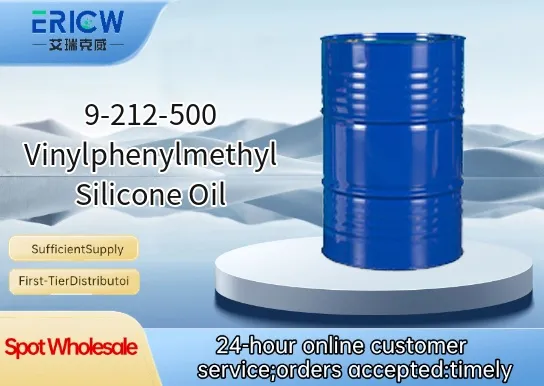
High thermal stability with continuous service capability up to 200 °C.
Excellent compatibility with organic resins, vinyl polymers, and phenolic systems.
Low volatility and minimal outgassing under vacuum or elevated temperature conditions.
Reactive vinyl groups enable covalent bonding in crosslinking formulations.
Phenyl substitution enhances UV resistance and refractive index control.
Heat-resistant release coatings for composite molding (e.g., aerospace prepregs).
Functional additive in high-performance silicone-modified acrylics and polyurethanes.
Base fluid for radiation-curable (UV/EB) silicone hybrid inks and coatings.
Surface modifier for silica-filled elastomers requiring improved dispersion and heat aging resistance.
| Chemical Type | Vinylphenylmethyl polysiloxane |
| Product Form | Clear, colorless to pale yellow liquid |
| Appearance | Homogeneous, low-viscosity oil |
| Primary Applications | Reactive silicone modifier, high-temp coating base, radiation-curable formulation component |
| Key Features | Thermally stable, UV-resistant, vinyl-reactive, phenyl-enhanced refractive index |
| Benefits | Improved adhesion to organic substrates, reduced post-cure shrinkage, enhanced long-term aging performance |
| Storage Conditions | Store in sealed containers at 15–25 °C, protect from moisture and direct sunlight |
Q1: What distinguishes 9-212-500 from standard methyl silicone oils?
A: 9-212-500 features a vinylphenylmethyl siloxane backbone, combining phenyl groups for enhanced thermal stability and UV resistance with vinyl functionality for potential hydrosilylation crosslinking—offering improved compatibility with aromatic polymers and reactive systems compared to conventional dimethyl silicone oils.
Q2: Is this product suitable for high-temperature applications?
A: Yes—its phenyl content imparts superior thermal stability relative to purely alkyl-substituted silicones, making it appropriate for use in environments where prolonged exposure to elevated temperatures (e.g., above 150 °C) is expected, particularly in specialty coatings, release agents, and heat-resistant lubricants.
Q3: Can 9-212-500 be used in formulations requiring UV resistance?
A: Yes—the phenyl moieties significantly improve resistance to UV-induced degradation, making it well-suited for outdoor applications such as protective topcoats, optical encapsulants, and UV-stable elastomer modifiers where long-term clarity and performance retention are critical.
Q4: How should 9-212-500 be incorporated into polymer systems?
A: It is typically added during the mixing or compounding stage under moderate shear and temperature conditions. Compatibility is generally good with styrenic, acrylic, and certain polyolefin-based systems; however, pre-testing for phase stability and dispersion is recommended due to its unique substituent profile.
Contact With Us:
E-mail: wangxingqiang@ericwchem.com
Have a Questions? Call Us:
Add:
Building A1, Jiete Industrial Park, Huangpu District, Guangzhou City, Guangdong Province, China