English
 Español
 tiếng việt
 русский
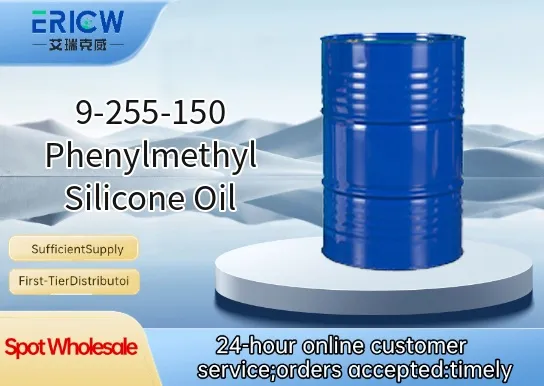
Excellent thermal stability up to 250 °C, maintaining viscosity integrity under prolonged high-temperature exposure.
Superior oxidative resistance due to phenyl group incorporation, minimizing degradation in demanding environments.
Low volatility and high flash point (>300 °C), enhancing safety during high-temperature processing and storage.
Broad compatibility with organic polymers, resins, and fillers, facilitating stable formulation integration.
Outstanding dielectric properties with low dissipation factor, suitable for electrical insulation applications.
High-temperature heat transfer fluids in industrial thermal systems and circulating ovens.
Base fluid in specialty lubricants for aerospace bearings and precision instrumentation.
Dielectric coolant in high-voltage transformers and electronic potting compounds.
Release agent for silicone rubber molding and composite demolding at elevated temperatures.
Viscosity modifier and functional additive in high-performance greases and thermal pastes.
| Chemical Type | Phenylmethyl polysiloxane |
| Product Form | Clear, colorless to pale yellow liquid |
| Appearance | Homogeneous, transparent, free of sediment or haze |
| Viscosity (cSt, 25 °C) | 150 ± 15 |
| Density (g/cm³, 25 °C) | 1.08–1.12 |
| Flash Point (°C, Cleveland Open Cup) | ≥ 300 |
| Refractive Index (25 °C) | 1.520–1.535 |
| Volatility (% weight loss, 200 °C/24 h) | ≤ 1.5 |
Q1: What distinguishes 9-255-150 from standard dimethyl silicone oils?
A: 9-255-150 is a phenylmethyl-substituted silicone oil, offering enhanced thermal stability, improved UV resistance, and greater compatibility with aromatic and polar systems compared to conventional dimethyl silicones. The phenyl groups contribute to higher refractive index and reduced volatility at elevated temperatures.
Q2: Is this product suitable for use in high-temperature industrial lubrication applications?
A: Yes — due to its phenylmethyl structure, 9-255-150 exhibits superior thermal oxidative stability and maintains viscosity integrity under prolonged exposure to temperatures commonly encountered in bearing greases, heat-transfer fluids, and oven conveyor lubricants. It is not intended for extreme continuous service above 250 °C without formulation support.
Q3: Can 9-255-150 be used as a surface modifier in coatings or inks?
A: Yes — it is widely employed to improve substrate wetting, reduce surface tension, and enhance leveling and slip properties in solvent-based and high-solids coating systems. Its compatibility with aromatic resins and low migration tendency make it particularly effective in decorative and protective finishes.
Q4: How does this silicone oil perform in silicone rubber compounding?
A: 9-255-150 functions effectively as a processing aid and plasticizer in high-performance silicone elastomers, especially where improved high-temperature compression set resistance and reduced extractables are required. It integrates homogeneously into the polymer matrix and supports consistent extrusion and molding behavior.
Contact With Us:
E-mail: wangxingqiang@ericwchem.com
Have a Questions? Call Us:
Add:
Building A1, Jiete Industrial Park, Huangpu District, Guangzhou City, Guangdong Province, China