English
 Español
 tiếng việt
 русский
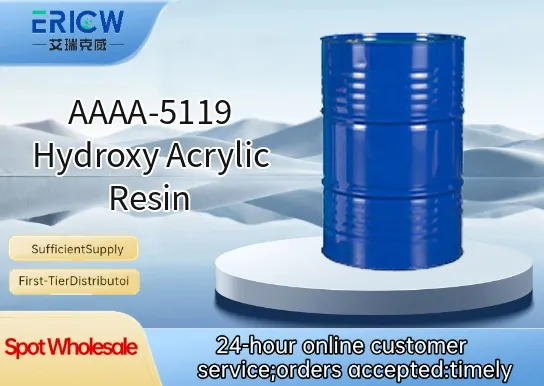
High hydroxyl functionality for excellent crosslinking efficiency with melamine and polyisocyanate curing agents.
Outstanding weather resistance and UV stability, ensuring long-term gloss and color retention in exterior coatings.
Low viscosity at high solids content, enabling formulation flexibility and reduced VOC emissions.
Excellent compatibility with common acrylic, polyester, and cellulose ester resins in hybrid systems.
Good substrate wetting and adhesion on metals, plastics, and pretreated surfaces without requiring additional adhesion promoters.
Automotive OEM and refinish topcoats requiring high durability and aesthetic performance.
Industrial maintenance coatings for machinery, agricultural equipment, and construction vehicles.
Architectural metal cladding and coil coatings demanding corrosion resistance and fade resistance.
Powder coating base resins for hybrid acrylic-polyester formulations.
High-performance plastic coatings for automotive interior and exterior trim components.
| Chemical Type | Hydroxy-functional acrylic copolymer |
| Product Form | Clear to pale yellow liquid |
| Appearance | Homogeneous, transparent, free of sediment |
| Solids Content (wt%) | 60 ± 2% (by weight, 120°C, 60 min) |
| Hydroxyl Value (mg KOH/g) | 85–95 |
| Acid Value (mg KOH/g) | < 5 |
| Viscosity (mPa·s, 25°C) | 4,000–7,000 (Brookfield RV, spindle #3, 20 rpm) |
| Diluent | Xylene / butyl acetate blend (typical) |
Q1: What is the primary functional role of AAAA-5119 in coating formulations?
A: AAAA-5119 serves as a hydroxyl-functional acrylic resin that provides reactive sites for crosslinking with melamine, urethane, or polyisocyanate curing agents—enabling the formation of durable, thermoset film networks with enhanced hardness, chemical resistance, and gloss retention.
Q2: Is AAAA-5119 compatible with common solvent-based and high-solids coating systems?
A: Yes, AAAA-5119 exhibits good solubility in standard organic solvents such as xylene, butyl acetate, and glycol ethers, and is widely used in both conventional solvent-borne and high-solids architectural and industrial coatings without significant compatibility issues.
Q3: How does AAAA-5119 contribute to film flexibility and adhesion performance?
A: Its carefully balanced molecular architecture delivers a favorable combination of rigidity and chain mobility, supporting excellent substrate adhesion—especially on metals and plastics—while maintaining sufficient flexibility to resist cracking under thermal or mechanical stress.
Q4: Can AAAA-5119 be used in low-VOC or water-reducible systems?
A: While inherently solvent-soluble, AAAA-5119 can be incorporated into water-reducible formulations via emulsification or hybrid dispersion techniques—often requiring co-resins or surfactants to stabilize the system; formulation optimization is recommended for target VOC and performance requirements.
Contact With Us:
E-mail: wangxingqiang@ericwchem.com
Have a Questions? Call Us:
Add:
Building A1, Jiete Industrial Park, Huangpu District, Guangzhou City, Guangdong Province, China