English
 Español
 tiếng việt
 русский
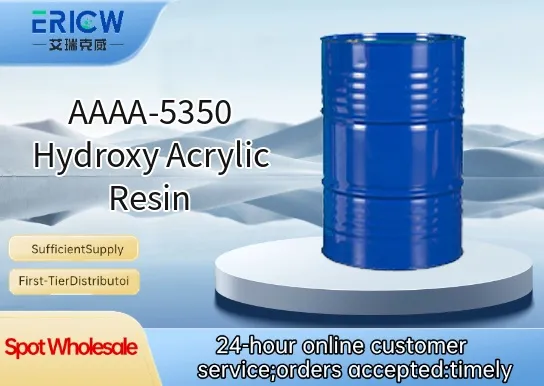
High hydroxyl functionality for excellent crosslinking efficiency with melamine and isocyanate curing agents.
Superior weather resistance and UV stability, ensuring long-term gloss retention in exterior coatings.
Low viscosity at high solids content (≥75% NV), enabling reduced solvent usage and improved VOC compliance.
Excellent compatibility with common acrylics, polyesters, and cellulose esters for versatile formulation flexibility.
Consistent batch-to-batch reproducibility, supporting robust industrial-scale coating production.
Automotive OEM and refinish topcoats requiring high hardness and chip resistance.
Industrial maintenance coatings for metal substrates exposed to harsh environmental conditions.
Architectural high-performance facade coatings demanding color stability and durability.
Powder coating hybrid systems where solution-based hydroxy acrylics enhance flow and leveling.
Plastic coatings for automotive interior trim and electronics housings requiring adhesion and flexibility.
| Chemical Type | Hydroxy-functional acrylic copolymer |
| Product Form | Liquid resin in aromatic hydrocarbon solvent blend |
| Appearance | Clear, pale yellow liquid |
| Non-Volatile Content (NV%) | 75.0 ± 1.0% (by weight, 120°C, 60 min) |
| Hydroxyl Value (OH#) | 85–95 mg KOH/g |
| Acid Value | < 5 mg KOH/g |
| Viscosity (25°C, Brookfield RVT, #4 spindle, 20 rpm) | 4,000–6,000 cP |
| Density (25°C) | 0.94–0.97 g/cm³ |
Q1: What is the primary functional role of AAAA-5350 in coating formulations?
A: AAAA-5350 serves as a hydroxyl-functional acrylic resin designed to participate in thermosetting reactions with crosslinkers such as melamine-formaldehyde or polyisocyanate resins, contributing to film hardness, chemical resistance, and durability in baked or ambient-cure systems.
Q2: Is AAAA-5350 suitable for high-solids or low-VOC applications?
A: Yes — AAAA-5350 is formulated to support medium-to-high solids content systems and can be integrated into low-VOC coating formulations when paired with appropriate solvents and co-resins, helping meet evolving environmental compliance expectations without compromising reactivity or film performance.
Q3: How does AAAA-5350 compare to polyester-based hydroxyl resins in terms of weatherability and yellowing resistance?
A: As an acrylic-based hydroxyl resin, AAAA-5350 generally offers superior UV stability and reduced tendency to yellow under prolonged exposure compared to many conventional hydroxyl-functional polyesters, making it well-suited for exterior architectural and automotive topcoat applications where long-term gloss retention and color stability are critical.
Q4: What viscosity range can be expected, and how does it influence formulation handling?
A: AAAA-5350 is supplied in a medium-viscosity liquid form, facilitating straightforward incorporation into resin blends and pigment grinding steps. Its rheology supports good flow and leveling while maintaining sufficient body for sag resistance during application — adjustments can be made using compatible reactive diluents or solvent blends as needed.
Q5: Can AAAA-5350 be used in water-reducible or hybrid aqueous-acrylic systems?
A: While AAAA-5350 is solvent-based, it can be adapted for use in water-reducible systems via emulsification or by serving as the hydrophobic backbone in hybrid architectures — however, successful integration requires careful evaluation of neutralization level, co-solvent selection, and compatibility with waterborne crosslinkers.
Contact With Us:
E-mail: wangxingqiang@ericwchem.com
Have a Questions? Call Us:
Add:
Building A1, Jiete Industrial Park, Huangpu District, Guangzhou City, Guangdong Province, China