English
 Español
 tiếng việt
 русский
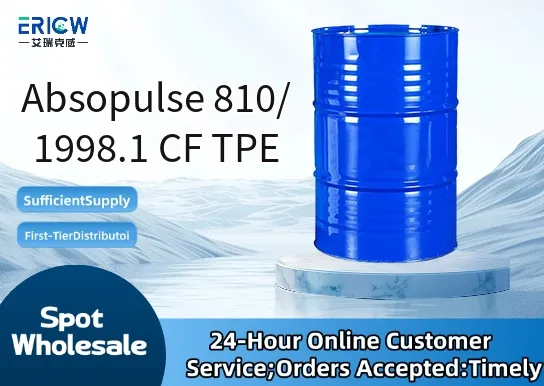
Thermoplastic elastomer (TPE) formulation with excellent compression set resistance for long-term sealing performance.
Halogen-free and RoHS-compliant, supporting sustainable manufacturing and regulatory compliance in sensitive industries.
Outstanding processability via injection molding and extrusion, enabling high-speed production with minimal scrap.
Good adhesion to polypropylene (PP) and polyethylene (PE), facilitating multi-material overmolding without primers.
Enhanced UV and thermal aging stability, maintaining mechanical integrity after prolonged exposure up to 90 °C.
Automotive interior trim seals and soft-touch overmolded components.
Consumer electronics gaskets and protective bumpers for handheld devices.
Medical device housings requiring skin-safe, non-leaching elastomeric surfaces.
Household appliance control knobs and ergonomic grips with tactile feedback.
Industrial fluid-handling connectors where chemical resistance to aliphatic hydrocarbons is required.
| Chemical Type | Thermoplastic Elastomer (TPE) — Styrenic Block Copolymer (SBC) based |
| Product Form | Pellets |
| Appearance | Off-white, uniform cylindrical pellets |
| Primary Applications | Overmolding, sealing, and soft-touch functional parts |
| Key Features | Halogen-free, good PP/PE adhesion, low compression set |
| Benefits | Reduced assembly steps, recyclable processing, no plasticizer migration |
| Density (g/cm³) | 0.93–0.95 |
| Melt Flow Rate (230 °C/2.16 kg, g/10 min) | 15–25 |
Q1: What is the primary functional role of Absopulse 810/1998.1 CF TPE in thermoplastic elastomer formulations?
A: Absopulse 810/1998.1 CF TPE functions as a high-efficiency processing aid and melt flow enhancer, specifically designed to improve extrudability, reduce melt viscosity, and support uniform dispersion of fillers and additives in TPE compounds without compromising final mechanical integrity.
Q2: Is Absopulse 810/1998.1 CF TPE compatible with common TPE base polymers such as SEBS, TPE-S, and TPO blends?
A: Yes — it demonstrates broad compatibility with styrenic block copolymers (e.g., SEBS), thermoplastic vulcanizates (TPVs), and polyolefin-based TPEs. Compatibility is typically confirmed through standard melt blending trials under typical processing conditions.
Q3: How should Absopulse 810/1998.1 CF TPE be incorporated into a TPE compound during manufacturing?
A: It is recommended for direct addition during the compounding stage — either via side-feeding or pre-blending with polymer pellets — followed by thorough melt mixing at standard extrusion temperatures. Pre-drying is not required, but storage under dry, cool conditions is advised to maintain handling consistency.
Q4: Does this product affect the surface appearance or post-processing behavior of finished TPE parts?
A: When used within recommended dosage ranges, it generally supports improved surface smoothness and reduced die buildup, contributing to more consistent part aesthetics and enhanced compatibility with secondary operations such as printing, bonding, or overmolding.
Contact With Us:
E-mail: wangxingqiang@ericwchem.com
Have a Questions? Call Us:
Add:
Building A1, Jiete Industrial Park, Huangpu District, Guangzhou City, Guangdong Province, China