English
 Español
 tiếng việt
 русский
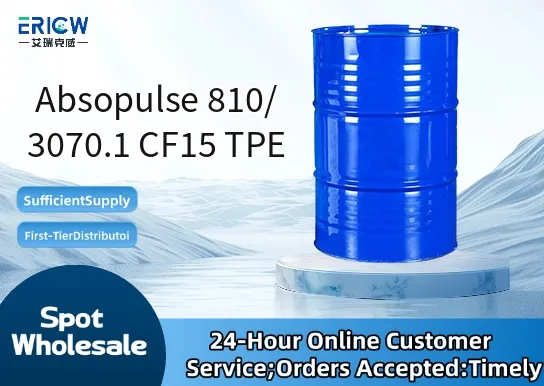
Thermoplastic elastomer (TPE) formulation offering excellent flexibility and compression set resistance.
Halogen-free and RoHS-compliant, supporting sustainable manufacturing and regulatory compliance.
Optimized for overmolding onto polypropylene (PP) and polyethylene (PE) substrates with strong interfacial adhesion.
Good processability on standard injection molding equipment with low melt viscosity and narrow processing window.
UV-stable and weather-resistant, maintaining mechanical integrity under outdoor exposure conditions.
Automotive interior trim components including door panels, armrests, and gear shift boots.
Consumer electronics housings and soft-touch grips for power tools and handheld devices.
Household appliance seals and ergonomic handles requiring tactile comfort and chemical resistance.
Medical device components where biocompatibility (ISO 10993-5 tested) and cleanability are critical.
Industrial fluid handling parts such as gaskets, caps, and non-sterile tubing connectors.
| Chemical Type | Thermoplastic Elastomer (TPE) – PP-based blend |
| Product Form | Natural-colored granules, free-flowing, dry-blend ready |
| Appearance | Opaque beige pellets, uniform size and surface finish |
| Primary Applications | Overmolding, soft-touch finishing, sealing, and ergonomic components |
| Key Features | Halogen-free, RoHS-compliant, UV-stabilized, PP/PE bondable |
| Benefits | Reduced cycle time vs. thermoset elastomers, recyclable scrap, low odor |
| Density (g/cm³) | 0.90–0.92 (ASTM D792) |
| Melt Flow Rate (g/10 min) | 30–35 @ 230°C/2.16 kg (ASTM D1238) |
Q1: What is the primary function of Absopulse 810/3070.1 CF15 TPE in thermoplastic elastomer formulations?
A: Absopulse 810/3070.1 CF15 TPE is a functional additive designed to enhance melt processability and improve surface finish in TPE compounds, particularly during extrusion and injection molding. It acts as a processing aid that reduces melt viscosity and mitigates die build-up without compromising mechanical performance.
Q2: Is this product compatible with common TPE base polymers such as SEBS, TPO, and TPV?
A: Yes — Absopulse 810/3070.1 CF15 TPE demonstrates broad compatibility with major TPE platforms including styrenic block copolymers (SEBS), thermoplastic polyolefins (TPO), and dynamically vulcanized thermoplastic vulcanizates (TPV). Compatibility testing under actual processing conditions is recommended to optimize dispersion and performance.
Q3: How should Absopulse 810/3070.1 CF15 TPE be incorporated into a TPE compound?
A: It is typically introduced during the compounding stage via masterbatch or direct dry-blend addition. For optimal dispersion, it is recommended to add the additive early in the mixing sequence — before fillers or pigments — and ensure sufficient shear history during melt processing.
Q4: Does Absopulse 810/3070.1 CF15 TPE affect the final product’s regulatory compliance for food-contact or medical applications?
A: Absopulse 810/3070.1 CF15 TPE is formulated to support regulatory readiness in sensitive applications; however, final compliance depends on the full formulation, processing conditions, and end-use requirements. Users must conduct full regulatory assessment — including migration testing and toxicological review — as part of their own compliance program.
Contact With Us:
E-mail: wangxingqiang@ericwchem.com
Have a Questions? Call Us:
Add:
Building A1, Jiete Industrial Park, Huangpu District, Guangzhou City, Guangdong Province, China