English
 Español
 tiếng việt
 русский
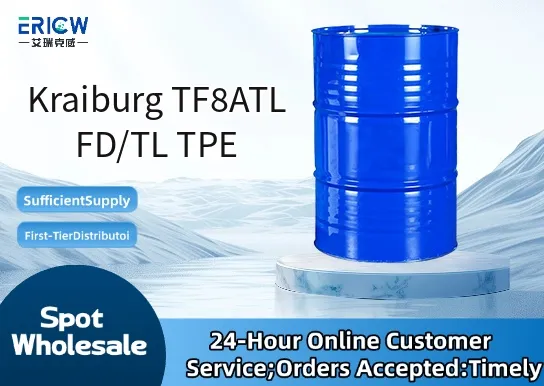
Excellent flame retardancy meeting UL 94 V-0 rating without halogen additives.
Outstanding low-temperature flexibility down to –50 °C with retained elasticity.
Good resistance to oils, greases, and common automotive fluids.
High processability via injection molding and extrusion with minimal thermal degradation.
Compliant with RoHS, REACH, and FDA 21 CFR §177.2600 for food-contact–compatible grades.
Automotive interior trim components including door panels and instrument cluster seals.
Low-voltage cable jacketing for EV charging systems and onboard wiring harnesses.
Sealing profiles for HVAC ducts and battery module enclosures in electric vehicles.
Medical device housings requiring flame-retardant, non-halogenated elastomeric performance.
Industrial control panel gaskets exposed to intermittent oil contact and wide temperature swings.
| Chemical Type | Thermoplastic Elastomer (TPE), Styrenic Block Copolymer (TPS-SEBS) based |
| Product Form | Pellets |
| Appearance | Opaque, off-white to light beige granules |
| Primary Applications | Flame-retardant sealing, automotive wiring, EV component encapsulation |
| Key Features | Halogen-free, UL 94 V-0 rated, low-temperature flexible, oil-resistant |
| Benefits | Enables lightweight design, simplifies recycling vs. thermosets, eliminates need for post-molding flame treatment |
| Processing Method | Injection molding, extrusion, overmolding onto PP, ABS, and PC substrates |
| Regulatory Compliance | RoHS 2015/863/EU, REACH SVHC-free, FDA 21 CFR §177.2600 (food-contact version available) |
Q1: What is the primary functional role of TF8ATL FD/TL TPE in thermoplastic elastomer formulations?
A: TF8ATL FD/TL TPE is a functional additive designed to enhance surface lubricity and reduce coefficient of friction in TPE compounds—particularly in dynamic sealing and soft-touch applications—without compromising mechanical integrity or processability.
Q2: Is TF8ATL FD/TL TPE compatible with common TPE base polymers such as SEBS, TPU, and TPV?
A: Yes, TF8ATL FD/TL TPE exhibits broad compatibility with major TPE families including styrenic block copolymers (SEBS), thermoplastic polyurethanes (TPU), and thermoplastic vulcanizates (TPV), enabling uniform dispersion and stable performance across diverse compound systems.
Q3: How is TF8ATL FD/TL TPE typically incorporated into TPE compounds during processing?
A: It is commonly introduced via masterbatch dilution or direct dry-blend addition prior to extrusion or injection molding. Processing temperatures should remain within standard TPE thermal windows to avoid premature migration or volatilization.
Q4: Does TF8ATL FD/TL TPE affect the recyclability of TPE parts?
A: When used at recommended dosage levels, TF8ATL FD/TL TPE does not significantly hinder mechanical recycling of TPEs; however, consistent formulation control is advised to maintain batch-to-batch performance in regrind streams.
Contact With Us:
E-mail: wangxingqiang@ericwchem.com
Have a Questions? Call Us:
Add:
Building A1, Jiete Industrial Park, Huangpu District, Guangzhou City, Guangdong Province, China