English
 Español
 tiếng việt
 русский
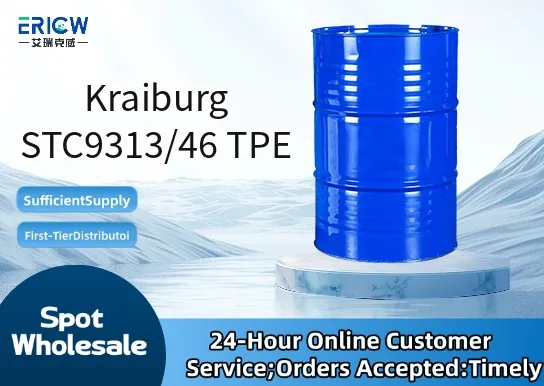
Excellent compression set resistance for long-term sealing performance.
Outstanding low-temperature flexibility down to –40 °C.
Good processability on standard injection molding and extrusion equipment.
High surface gloss and excellent colorability with minimal pigment load.
Halogen-free formulation compliant with RoHS and REACH requirements.
Automotive interior trim seals and gaskets.
Consumer electronics protective overmolding (e.g., tool handles, grips).
Household appliance components requiring soft-touch feel and durability.
Medical device housings and non-invasive interface parts.
Industrial fluid handling components compatible with water and mild cleaning agents.
| Chemical Type | Thermoplastic Elastomer (TPE), Styrenic Block Copolymer (TPS) |
| Product Form | Pellets |
| Appearance | Translucent, natural-colored granules |
| Primary Applications | Overmolding, sealing, soft-touch components |
| Key Features | Low compression set, high elasticity, easy processing |
| Benefits | Reduced part warpage, excellent dimensional stability, recyclable |
| Processing Temperature Range | 180–220 °C (melt temperature) |
| Compliance | RoHS 2015/863/EU, REACH SVHC-free |
Q1: What is the primary function of STC9313/46 in TPE formulations?
A: STC9313/46 is a specialized processing aid and surface modifier designed to enhance melt flow, reduce die buildup, and improve gloss and tactile feel in thermoplastic elastomer compounds—particularly in soft-touch overmolding and extruded profiles.
Q2: Is STC9313/46 compatible with common TPE base polymers such as SEBS, TPE-S, and TPE-V?
A: Yes, STC9313/46 demonstrates broad compatibility with styrenic (SEBS/SBS), thermoplastic vulcanizate (TPV), and polyolefin-based TPE systems. It disperses readily during standard compounding processes without phase separation or adverse effects on mechanical properties.
Q3: How should STC9313/46 be incorporated into the manufacturing process?
A: It is typically added during the masterbatch stage or directly into the extruder feed throat at temperatures below 200 °C. Pre-drying is not required, and it remains stable under standard TPE processing conditions including injection molding and extrusion.
Q4: Does STC9313/46 affect the final product’s regulatory compliance for food-contact or skin-contact applications?
A: STC9313/46 is formulated without intentionally added heavy metals, phthalates, or known allergens. While it is not itself certified, it has been successfully used in formulations that meet relevant food-contact and skin-safe requirements—subject to full system validation by the compounder or end-user.
Contact With Us:
E-mail: wangxingqiang@ericwchem.com
Have a Questions? Call Us:
Add:
Building A1, Jiete Industrial Park, Huangpu District, Guangzhou City, Guangdong Province, China