English
 Español
 tiếng việt
 русский
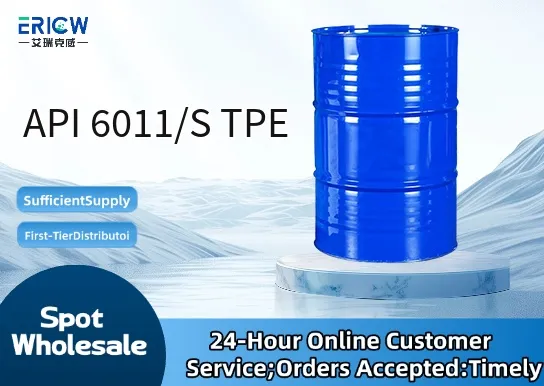
Thermoplastic elastomer (TPE) formulation offering excellent processability via injection molding and extrusion.
Good resistance to UV exposure and thermal aging, enhancing long-term performance in outdoor applications.
Low compression set with high resilience, ensuring reliable sealing and rebound behavior under cyclic stress.
Halogen-free and RoHS-compliant, supporting sustainable manufacturing and regulatory requirements.
Smooth surface finish and consistent melt flow, enabling high-gloss aesthetics without secondary finishing.
Automotive interior trim components including soft-touch dashboards, door panels, and console seals.
Consumer electronics housings and protective overmolded grips for power tools and handheld devices.
Medical device components requiring skin-contact compatibility and sterilization resistance (e.g., non-invasive wearable enclosures).
Industrial gaskets, vibration-damping mounts, and dynamic sealing elements in fluid handling systems.
| Chemical Type | Thermoplastic Elastomer (TPE), SEBS-based |
| Product Form | Natural-colored granules, free-flowing |
| Appearance | Opaque, off-white pellets with uniform size distribution |
| Hardness (Shore A) | 65 ± 3 |
| Melt Flow Rate (230°C/2.16 kg) | 18–22 g/10 min |
| Density | 0.91–0.93 g/cm³ |
| Continuous Use Temperature Range | −40°C to +70°C |
| Primary Applications | Overmolding, soft-touch surfaces, dynamic seals, low-stress structural components |
Q1: What is the primary function of API 6011/S TPE in polymer formulations?
A: API 6011/S TPE functions as a high-performance thermoplastic elastomer modifier, primarily used to enhance flexibility, impact resistance, and melt processability in rigid thermoplastic matrices—especially polypropylene and polyethylene blends.
Q2: Is API 6011/S TPE suitable for food-contact applications?
A: API 6011/S TPE is formulated without intentionally added heavy metals or known endocrine disruptors, and it is commonly selected for food-contact-adjacent applications where regulatory compliance is managed at the final compound level; however, end-use approval requires full formulation evaluation by the compounder and relevant authorities.
Q3: How does API 6011/S TPE perform under thermal processing conditions?
A: This grade exhibits good thermal stability during standard extrusion and injection molding processes, with minimal degradation observed up to typical processing temperatures for polyolefin-based systems. It maintains consistent rheological behavior across multiple thermal cycles, supporting regrind reuse in controlled manufacturing environments.
Q4: Can API 6011/S TPE be blended with other elastomers or compatibilizers?
A: Yes—API 6011/S TPE demonstrates broad compatibility with common polyolefin-based elastomers (e.g., EPDM, POE) and can be effectively paired with maleic anhydride-grafted compatibilizers to improve interfacial adhesion in multi-phase blends.
Q5: What are the recommended storage and handling practices?
A: Store in original sealed packaging at ambient temperature and low humidity; avoid prolonged exposure to UV light or elevated temperatures prior to processing. Pre-drying is generally not required, though conditioning may be beneficial if material has been exposed to high-humidity environments.
Contact With Us:
E-mail: wangxingqiang@ericwchem.com
Have a Questions? Call Us:
Add:
Building A1, Jiete Industrial Park, Huangpu District, Guangzhou City, Guangdong Province, China